Key Takeaways
Both organic and synthetic fertilizers can create stunning lawns, but choosing the right type depends on your soil conditions, timeline expectations, and long-term lawn health goals for our mountain region.
- Organic fertilizers release nutrients slowly and improve soil structure over time
- Synthetic fertilizers provide immediate results but require more frequent applications
- Mountain soils in our region often benefit from organic matter that improves drainage
- Combining both types strategically can maximize lawn health and appearance
- Professional soil testing determines which approach works best for your property
Understanding Fertilizer Types for Mountain Region Lawns
For over 50 years, our family has watched countless homeowners struggle with fertilizer decisions that directly impact their lawn’s long-term health and beauty. Choose organic fertilizers, and you’ll feed beneficial soil microorganisms while building lasting soil structure. Pick synthetic options, and you’ll see rapid green-up but may miss opportunities to address underlying soil deficiencies common in our acidic mountain soils.
Every property presents unique challenges, especially in areas like Biltmore Forest where established landscapes require careful nutrient management. Our decades of experience have taught us that successful fertilization starts with understanding your soil’s current condition and your lawn’s specific needs throughout our distinct growing seasons.
How Organic Fertilizers Build Long-Term Soil Health
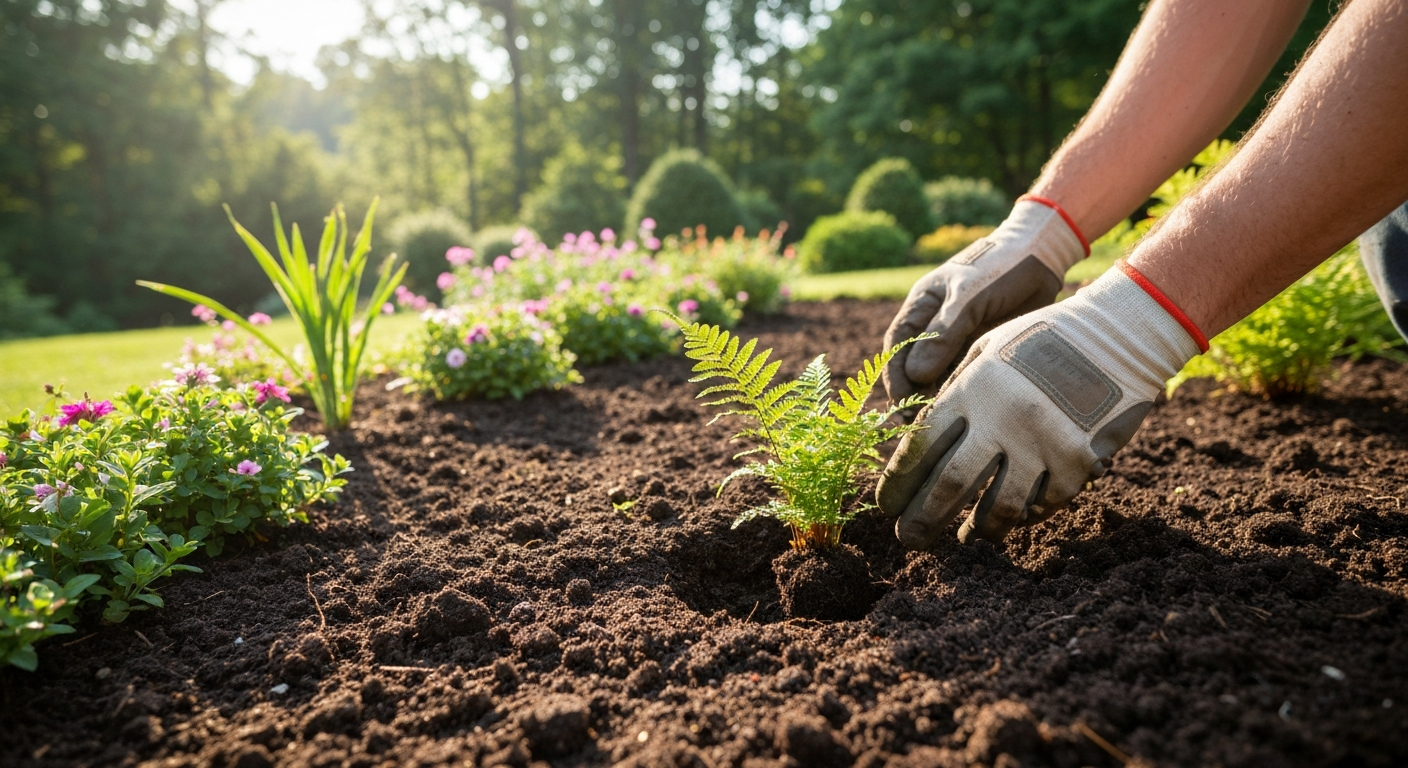
Organic fertilizers work differently than their synthetic counterparts by feeding soil biology first, then releasing nutrients as microorganisms break down organic matter. This process creates healthier soil structure, improves water retention, and builds natural disease resistance that keeps lawns beautiful year after year.
According to North Carolina State University Extension, organic fertilizers typically contain 3-10% nitrogen compared to synthetic versions with 20-30%, but they provide sustained feeding over 6-12 weeks rather than quick bursts. “Organic fertilizers improve soil biology and create more resilient turfgrass systems,” explains Dr. Rick Brandenburg, NC State’s turfgrass entomology specialist. “The slow-release nature means less potential for nutrient runoff and more consistent plant nutrition.”
We’ve seen remarkable transformations in soil quality improvement projects where homeowners committed to organic programs for multiple seasons. The difference becomes especially noticeable during drought stress periods when organically-fed lawns maintain better color and density.
When Synthetic Fertilizers Make Sense
Synthetic fertilizers deliver immediate results when you need rapid lawn recovery or quick color improvement for special occasions. These concentrated nutrient sources work particularly well for new seeding projects, spring green-up after harsh winters, or correcting severe deficiencies identified through soil testing.
The controlled-release synthetic options available today provide more sustained feeding than older quick-release formulations, bridging the gap between immediate results and longer-term soil health. According to the Environmental Protection Agency, properly applied synthetic fertilizers can be environmentally responsible when used according to label directions and soil test recommendations.
Our professional maintenance programs often incorporate synthetic fertilizers strategically during establishment phases or recovery periods, then transition toward organic approaches as soil health improves. This balanced strategy gives homeowners both immediate satisfaction and long-term lawn sustainability.
Application Timing Considerations
Synthetic fertilizers require precise timing to avoid burning grass during hot weather or stimulating growth during dormancy periods. Our family’s five decades of experience in this region has taught us exactly when conditions are right for safe, effective synthetic applications that won’t stress your turf.
Regional Soil Conditions That Influence Your Choice
Mountain soils around Asheville present specific challenges that influence fertilizer selection more than many homeowners realize. Our naturally acidic soils, heavy clay content in many areas, and significant rainfall during growing seasons create conditions where organic matter becomes especially valuable for long-term success.
According to the USDA Natural Resources Conservation Service, our regional soils often have pH levels between 4.5-6.0, which can limit nutrient availability regardless of fertilizer type. “Acidic soils benefit significantly from organic matter additions that help buffer pH and improve nutrient cycling,” notes Dr. Carl Walters from NC State’s Soil Science Department.
Clay-heavy soils common in established neighborhoods compact easily and benefit from organic fertilizers that encourage earthworm activity and natural soil loosening. Our comprehensive soil analysis services help identify these specific conditions before recommending fertilizer strategies that address your property’s unique characteristics.
Seasonal Performance Differences
Cool, wet springs in our region can slow organic fertilizer activation when synthetic options provide earlier season feeding. However, hot, dry summer periods often favor organic programs that maintain steady nutrient release without stress-inducing rapid growth spurts.
Cost Considerations and Application Frequency
Organic fertilizers typically cost more per application but require fewer treatments annually, while synthetic options cost less initially but need more frequent reapplication. Smart homeowners calculate total annual costs rather than per-bag prices to make informed decisions.
Professional application services factor in labor costs, timing precision, and results monitoring that affect overall value regardless of fertilizer type. Our family has built lasting relationships with clients by focusing on total lawn health rather than promoting the most expensive options available.
According to Rutgers University Extension research, organic fertilizer programs often show cost advantages after the second year as soil improvement reduces overall input needs. The key lies in choosing customized programs that match your budget with realistic expectations for results timing and maintenance requirements.
Frequently Asked Questions
Can you mix organic and synthetic fertilizers together?
Yes, many successful lawn programs combine both types strategically throughout the growing season. Professional programs often use synthetic fertilizers for spring startup and fall preparation, with organic applications during summer months for sustained health.
How long does organic fertilizer take to show results?
Organic fertilizers typically show visible improvements within 3-6 weeks, compared to 1-2 weeks for synthetic options. However, organic results last longer and continue improving soil conditions for future seasons.
Which type works better for new grass seed?
New seeding projects often benefit from starter fertilizers with synthetic phosphorus for rapid root development, followed by organic programs once grass establishes. The combination provides both immediate germination support and long-term soil building.
Do organic fertilizers work in cold weather?
Organic fertilizers require soil microbial activity to release nutrients, so they work slowly during cold periods. Fall applications can be effective as they break down gradually through winter for spring availability.
How often should you apply each type of fertilizer?
Synthetic fertilizers typically require 3-5 applications annually, while organic programs often need only 2-3 treatments. Soil testing and grass type determine optimal scheduling for your specific property.
Which fertilizer type is safer for pets and children?
Organic fertilizers generally pose lower immediate risks, but both types should be applied according to label directions with appropriate waiting periods before allowing foot traffic on treated areas.
Can fertilizer choice affect water quality?
Proper application of either type minimizes environmental impact, but organic fertilizers typically have lower runoff potential due to slower nutrient release and improved soil water retention.
How do you know which type your lawn needs?
Professional soil testing reveals nutrient deficiencies, pH levels, and organic matter content that determine the most effective fertilizer strategy. Visual symptoms and grass performance also guide selection decisions.
Get Professional Guidance for Your Lawn’s Success
Making the wrong fertilizer choice can waste money and potentially damage your lawn’s long-term health, especially with our region’s unique soil conditions and weather patterns. Professional soil testing and customized fertilizer recommendations take the guesswork out of lawn nutrition while ensuring you see the beautiful results your property deserves. Every project we take on is personal to us, because this isn’t just about fertilizers and applications—it’s about building lasting relationships and keeping our family tradition of exceptional lawn care alive. Contact us today for expert fertilizer recommendations based on your soil’s specific needs.