 proper mulching techniques tips” class=”wp-image-979″ srcset=”https://hutchnsonlandscaping.com/wp-content/uploads/2026/05/proper-mulching-techniques-tips-1.png 1408w, https://hutchnsonlandscaping.com/wp-content/uploads/2026/05/proper-mulching-techniques-tips-1-300×164.png 300w, https://hutchnsonlandscaping.com/wp-content/uploads/2026/05/proper-mulching-techniques-tips-1-1024×559.png 1024w, https://hutchnsonlandscaping.com/wp-content/uploads/2026/05/proper-mulching-techniques-tips-1-768×419.png 768w, https://hutchnsonlandscaping.com/wp-content/uploads/2026/05/proper-mulching-techniques-tips-1-600×327.png 600w” sizes=”(max-width: 1408px) 100vw, 1408px” />
Key Takeaways
Apply proper mulching techniques to protect your plants, retain soil moisture, and create beautiful garden beds that thrive year-round with the right materials and methods.
- Apply mulch 2-4 inches deep around plants while keeping it away from tree trunks and plant stems
- Choose organic mulches like shredded hardwood or pine bark for long-lasting soil benefits
- Replace mulch annually in spring to maintain soil health and visual appeal
- Create clean edges around mulched areas for professional-looking garden beds
- Water thoroughly before applying fresh mulch to help retain existing soil moisture
Why Smart Mulching Makes All the Difference
For over 50 years, our family has watched countless gardens transform through proper mulching practices. Smart mulching does more than make your beds look polished – it creates the foundation for healthy plant growth while reducing your maintenance workload throughout the growing season.
The difference between adequate mulching and expert application shows in every aspect of your garden’s performance. Well-mulched beds retain moisture during dry spells, suppress weeds naturally, and provide steady soil insulation that protects plant roots from temperature extremes. Our comprehensive landscaping approach always includes detailed mulching strategies because we know this simple practice delivers lasting results.
Selecting the Right Mulch for Your Garden Beds
Choose your mulch material based on your specific garden needs and aesthetic preferences. Organic options like shredded hardwood bark, pine straw, and composted leaves break down slowly while enriching your soil. These materials work beautifully in flower beds and around trees where you want long-term soil improvement.
Inorganic mulches like decorative stone or rubber chips offer permanent solutions for high-traffic areas and contemporary landscape designs. According to the University of Georgia Extension, organic mulches provide superior soil benefits by adding nutrients as they decompose naturally. Consider your garden design goals when making this choice – organic mulches suit traditional plantings while stone mulches complement modern architectural features.
Mastering the Application Process
Prepare Your Beds Properly
Start with clean, weed-free soil before applying any mulch material. Remove existing weeds by hand or with appropriate tools, then water the area thoroughly. This preparation step ensures your mulch layer sits properly and provides maximum benefit to your plants.
Apply the Perfect Depth
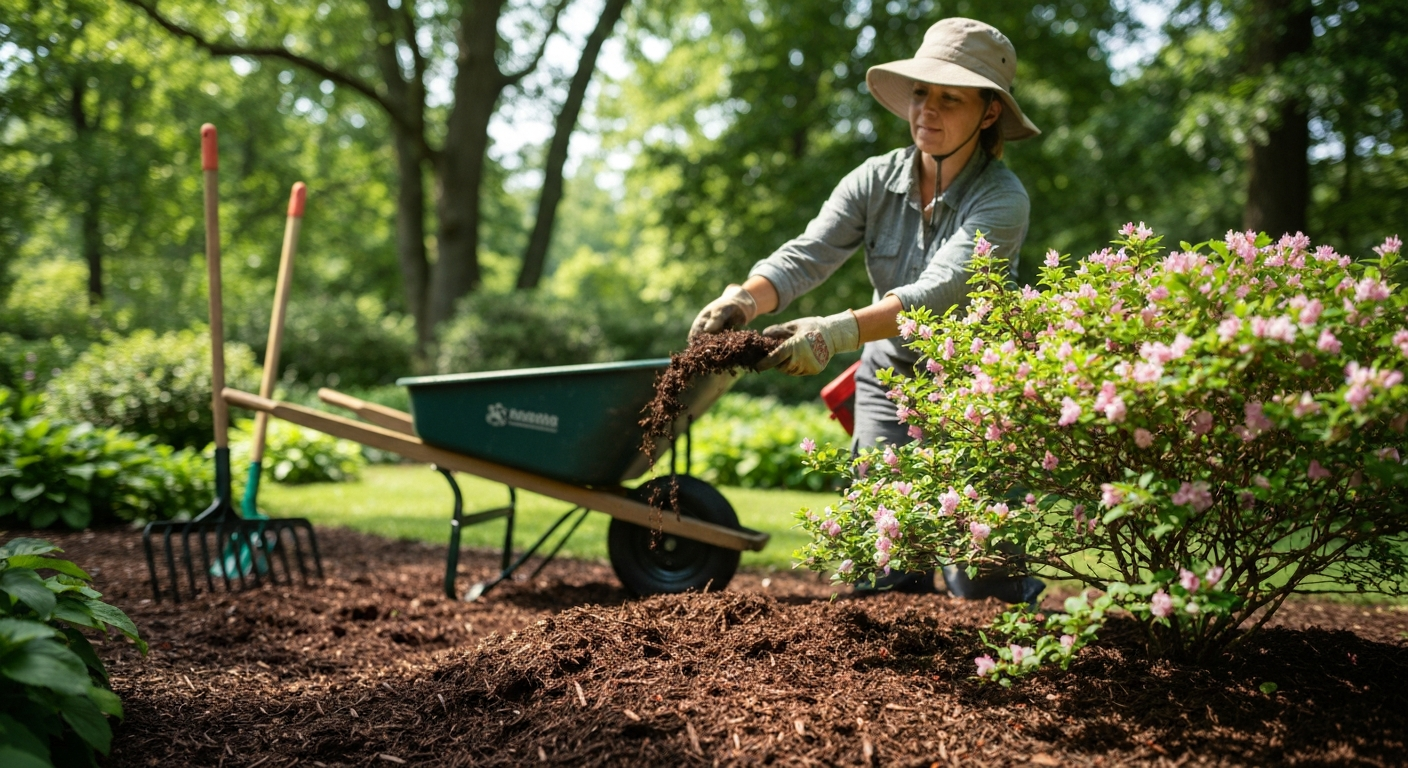
Spread mulch 2-4 inches deep throughout your garden beds, adjusting thickness based on material type. Fine mulches like grass clippings need thinner application, while coarser materials like wood chips can go deeper. Keep mulch several inches away from plant stems and tree trunks to prevent moisture-related problems and pest issues.
According to the North Carolina Cooperative Extension, proper mulch depth significantly reduces water evaporation while allowing adequate air circulation around plant roots. Our seasonal maintenance programs include regular mulch depth checks to keep your beds performing optimally year-round.
Timing Your Mulch Applications Right
Apply fresh mulch in late spring after soil temperatures warm up and new plant growth begins. This timing allows your plants to establish strong root systems while giving you the full growing season benefits of moisture retention and weed suppression.
Refresh existing mulch annually or when the layer becomes thin and compacted. In this region, spring application works well for most garden situations, though you might add supplemental mulch in fall around sensitive plants that need extra winter protection. Every project we take on is personal to us, and proper timing makes the difference between adequate results and stunning garden performance that lasts.
Consider your specific plant needs when scheduling mulch applications. According to the American Horticultural Society, newly planted trees and shrubs benefit most from immediate mulching that continues throughout their establishment period. Our tree installation service always includes proper mulching to give new plantings the best possible start.
Avoiding Common Mulching Mistakes
Prevent Mulch Volcanoes
Never pile mulch against tree trunks in cone-shaped mounds. This common mistake traps moisture against bark and creates ideal conditions for pest problems and root rot. Instead, spread mulch in a wide, flat circle that extends to the tree’s drip line.
Choose Appropriate Materials
Avoid using fresh grass clippings or uncomposted leaves as mulch around valuable plants. These materials can create heat as they decompose rapidly, potentially damaging sensitive root systems. Stick with aged, stable materials that break down gradually without generating excessive heat.
According to the Morton Arboretum, improper mulch application causes more plant problems than beneficial results. Our plant health services include regular monitoring to ensure your mulched beds maintain optimal growing conditions throughout every season.
Frequently Asked Questions
How often should I replace mulch in my garden beds?
Replace organic mulch annually in spring when it becomes thin or begins showing signs of decomposition. Well-applied mulch typically lasts one full growing season before needing refreshing, though high-traffic areas might need attention sooner.
What type of mulch works best around vegetable gardens?
Use organic materials like straw, grass clippings, or shredded leaves around vegetables. These materials break down quickly to add nutrients while providing season-long moisture retention and weed suppression for productive garden beds.
Can I apply mulch directly over existing weeds?
Remove existing weeds before applying mulch for best results. While thick mulch layers suppress some weed growth, established weeds often push through mulch and become harder to remove once the mulch settles around them.
How far should mulch extend around trees and shrubs?
Extend mulch to the drip line of mature trees when possible, or at least 3-4 feet from the trunk for optimal root zone coverage. Around shrubs, create mulch circles that extend 12-18 inches beyond the plant’s current spread.
Is colored mulch safe for my plants and soil?
Quality colored mulches use plant-safe dyes that won’t harm soil or plants. However, check that colored mulch comes from clean wood sources without chemical treatments that might affect soil chemistry over time.
Should I remove old mulch before applying new layers?
Remove old mulch if it’s heavily compacted, moldy, or more than 4 inches deep total. Otherwise, you can apply new mulch over existing layers that are breaking down naturally and still allow proper air and water movement.
What mulch depth works best for flower beds versus tree areas?
Apply 2-3 inches of mulch around flowers and perennials, and 3-4 inches around trees and large shrubs. Delicate plants need thinner applications while established trees benefit from deeper mulch coverage for root protection.
Get Professional Mulching Results That Last
Proper mulching techniques require attention to detail and understanding of how different materials affect your specific plants and soil conditions. Mistakes in material selection, application depth, or timing can waste money and potentially harm your valuable landscape plants. Our family’s 50+ years of experience in Asheville means we know exactly which mulching approaches work best for different garden situations and plant types. Contact us today.