 proper mulching techniques tips” class=”wp-image-982″ srcset=”https://hutchnsonlandscaping.com/wp-content/uploads/2026/05/proper-mulching-techniques-tips-1-1.png 1408w, https://hutchnsonlandscaping.com/wp-content/uploads/2026/05/proper-mulching-techniques-tips-1-1-300×164.png 300w, https://hutchnsonlandscaping.com/wp-content/uploads/2026/05/proper-mulching-techniques-tips-1-1-1024×559.png 1024w, https://hutchnsonlandscaping.com/wp-content/uploads/2026/05/proper-mulching-techniques-tips-1-1-768×419.png 768w, https://hutchnsonlandscaping.com/wp-content/uploads/2026/05/proper-mulching-techniques-tips-1-1-600×327.png 600w” sizes=”(max-width: 1408px) 100vw, 1408px” />
Key Takeaways
Proper mulching protects plants, conserves moisture, and creates stunning garden beds when done correctly with the right materials and application methods.
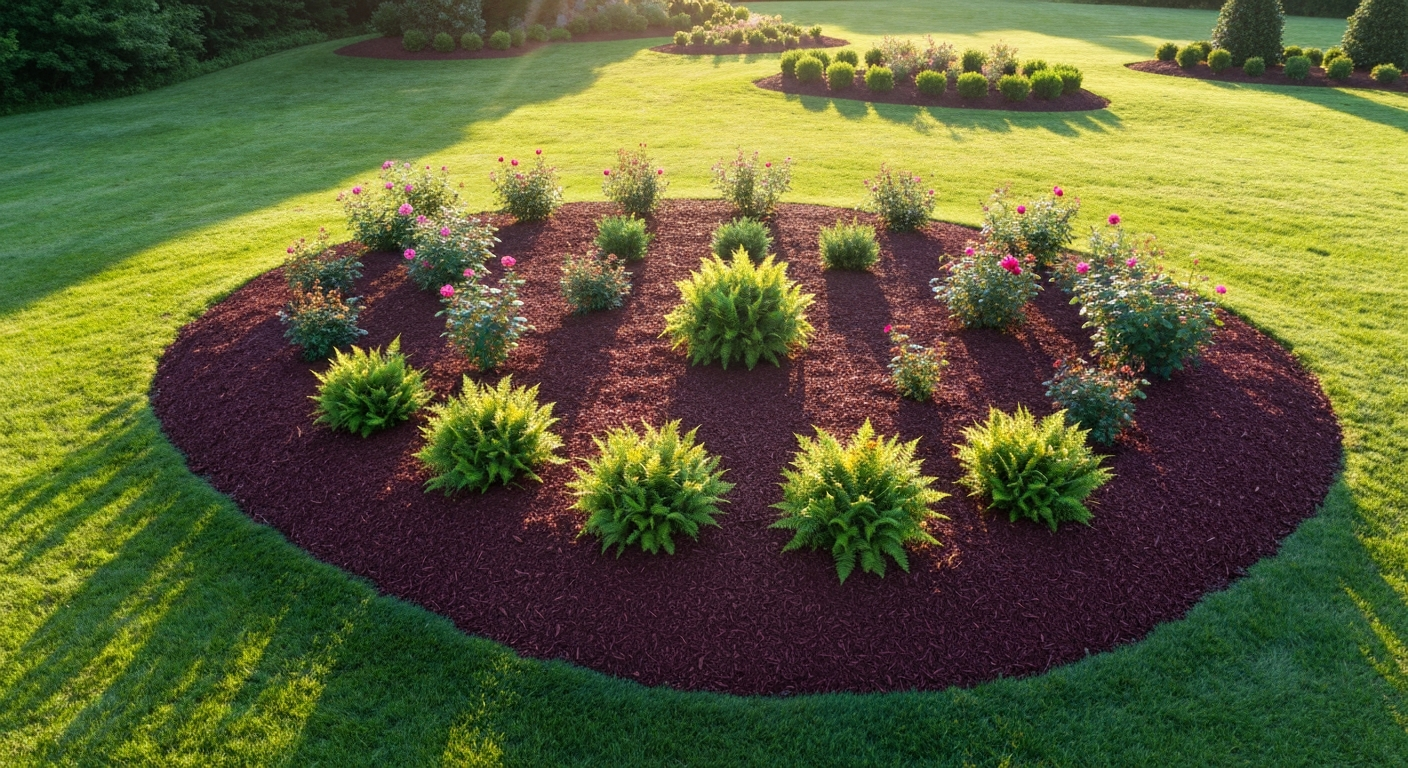
- Apply mulch 2-4 inches deep around plants, keeping it away from tree trunks and plant stems
- Choose organic materials like shredded hardwood, pine bark, or compost for best long-term results
- Install mulch after soil preparation and planting for maximum effectiveness
- Refresh mulch annually to maintain proper depth and appearance
- Avoid volcano mulching around trees, which can cause root rot and pest problems
Why Proper Mulching Makes All the Difference
For over 50 years, our family has watched countless homeowners struggle with dried-out flower beds, weedy gardens, and plants that never quite reach their potential. The solution often lies in something surprisingly simple: proper mulching techniques. When you master these fundamentals, your garden beds transform from maintenance headaches into beautiful, thriving spaces that practically take care of themselves.
Mulching goes far beyond just making your garden design look polished. The right mulch application creates a protective barrier that regulates soil temperature, retains precious moisture, and prevents weeds from taking over your carefully planned plantings. Every project we take on is personal to us, and we’ve seen how proper mulching techniques can make the difference between a garden that struggles and one that flourishes year after year.
Choosing the Right Mulch Materials
Organic mulches deliver the best long-term value for most garden applications. Shredded hardwood bark provides excellent coverage and breaks down slowly, feeding your soil as it decomposes. Pine bark nuggets work beautifully around established trees and shrubs, offering attractive texture while allowing water to penetrate easily. Compost-based mulches add nutrients directly to your soil but may need more frequent replacement.
Avoid common mulching mistakes by steering clear of fresh wood chips around delicate plants, as they can temporarily tie up nitrogen during decomposition. Rubber mulch and landscape fabric might seem convenient, but they prevent natural soil improvement and can create drainage problems over time. Our maintenance services focus on sustainable solutions that build soil health naturally.
Application Techniques That Protect Your Plants
Start mulching after completing your soil preparation and plant installation. Clear existing weeds and debris, then water the area thoroughly before applying your chosen material. Create a 2-4 inch layer around most plants, tapering to 1-2 inches near delicate perennials and extending the coverage to the plant’s drip line.
Keep mulch pulled back 3-6 inches from tree trunks and plant stems to prevent moisture buildup that encourages rot and pest problems. This gap allows air circulation while still providing the moisture retention and temperature control that makes mulching so effective. According to the University of Georgia Extension, proper mulch placement can reduce watering needs by up to 50 percent while dramatically reducing weed pressure.
Seasonal Timing Considerations
Apply fresh mulch in late spring after soil temperatures warm up, typically around Asheville in late April or early May. Fall applications work well for newly planted areas, giving roots extra winter protection. Avoid mulching too early in spring, as it can keep soil temperatures cool and delay plant growth.
Maintenance and Troubleshooting Common Problems
Refresh your mulch annually by adding a thin layer over existing material rather than removing everything. Turn compacted areas with a garden fork to restore proper water penetration. Watch for signs of over-mulching like mushroom growth, sour smells, or plants that seem stressed despite adequate care.
“Proper mulch management is one of the most cost-effective ways homeowners can improve their garden’s health and appearance,” says Dr. Frank Henning, Extension Specialist at NC State University. “The key is maintaining that sweet spot of adequate coverage without creating problems from excess moisture or depth.” Address weeds that break through by spot-treating rather than adding more mulch, which can create drainage issues.
According to the USDA Forest Service, organic mulches should never exceed 4 inches in depth, as deeper applications can create anaerobic conditions that harm plant roots. Regular seasonal cleanup helps maintain the right balance while keeping your beds looking their best throughout the year.
Frequently Asked Questions
How deep should I apply mulch around my plants?
Apply 2-4 inches of mulch around most shrubs and trees, tapering to 1-2 inches near delicate perennials. Keep mulch 3-6 inches away from plant stems and tree trunks to prevent moisture problems and pest issues.
What type of mulch works best for flower beds?
Shredded hardwood bark or fine pine bark mulch works excellently for flower beds. These materials break down slowly, look attractive, and allow easy planting of annuals. Avoid chunky materials that make it difficult to work in the beds.
When should I replace old mulch?
Add fresh mulch annually in spring, typically adding 1-2 inches over existing decomposed material. You don’t need to remove old organic mulch, as it continues improving your soil as it breaks down naturally.
Can I use grass clippings as mulch?
Fresh grass clippings can mat down and create drainage problems. If using grass clippings, let them dry first and apply thin layers. Avoid clippings from lawns treated with herbicides, as these chemicals can harm your garden plants.
Is it okay to mulch right up to tree trunks?
Never create “volcano” mulching around trees. Keep mulch 3-6 inches away from the trunk to prevent bark rot, pest problems, and root girdling. The mulch should form a donut shape, not a cone.
How do I prevent weeds from growing through mulch?
Apply adequate depth (2-4 inches) and refresh annually to maintain coverage. Pull weeds promptly when they appear rather than adding more mulch. Pre-emergent herbicides can be applied before mulching for additional weed prevention.
Should I use landscape fabric under mulch?
Skip landscape fabric in most applications. It prevents natural soil improvement from decomposing organic matter and can create drainage issues over time. Proper mulch depth provides excellent weed control without these drawbacks.
Get Professional Results That Last
Poor mulching techniques can waste money and actually harm your plants, while proper application creates beautiful, low-maintenance garden beds that improve year after year. Our family has spent decades perfecting these methods through hands-on experience serving homeowners throughout this region. When you’re ready to give your landscape the care it deserves with proven techniques that deliver lasting results, contact us today.