Overseeding After Aeration: A Guide for Asheville Homeowners

Key Takeaways
Proper overseeding after aeration creates the foundation for thick, healthy grass that can handle Asheville’s mountain climate and seasonal challenges year after year.
- Aerate compacted soil first to create optimal seed-to-soil contact
- Choose grass varieties suited to Asheville’s elevation and climate conditions
- Time overseeding with fall’s cooler temperatures for best germination
- Water consistently but avoid oversaturation during establishment
- Apply starter fertilizer to support new seedling development
Understanding Asheville’s Unique Lawn Conditions
Asheville’s mountain terrain creates specific challenges for lawn establishment that generic overseeding advice simply doesn’t address. Clay-heavy soils become compacted from seasonal moisture, elevation changes affect drainage patterns, and temperature fluctuations between seasons stress grass roots. Our family has worked these mountain properties for over five decades, and we’ve learned that successful overseeding starts with understanding your specific site conditions.
Compacted soil prevents seed germination regardless of how much effort you put into spreading grass seed. According to the University of Georgia Extension, compacted soils reduce root penetration by up to 60%, making aeration the critical first step. For more information on soil compaction, see soil compaction on Wikipedia. Mountain properties often develop compaction from heavy clay content mixed with seasonal water runoff, creating conditions where grass struggles to establish without proper landscape site analysis and soil preparation.
The Science Behind Aeration and Overseeding
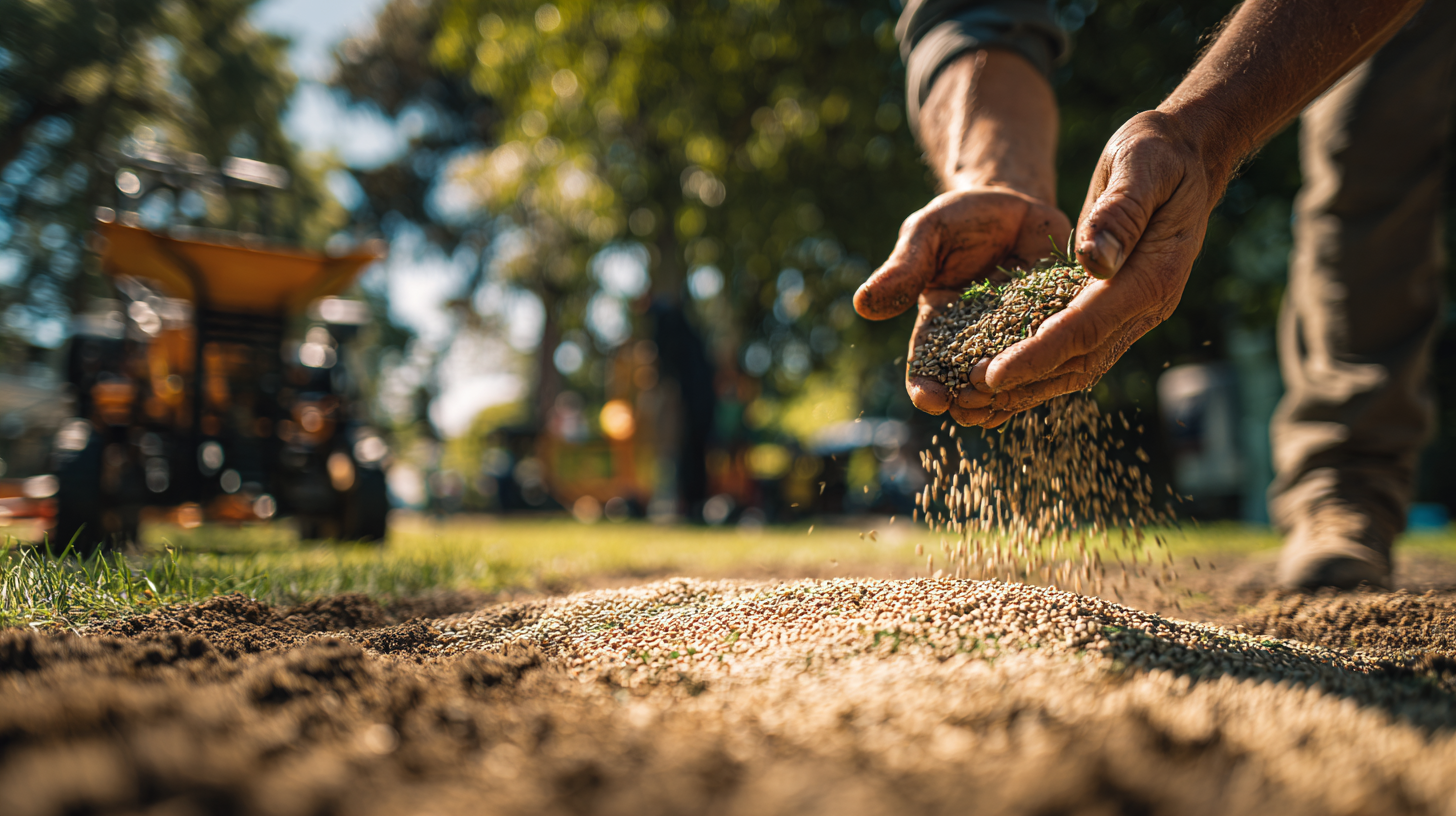
Core aeration removes small plugs of soil, creating channels that allow air, water, and nutrients to reach grass roots effectively. These holes become perfect seed beds when you overseed immediately afterward. The seed falls into the aeration holes where it makes direct contact with soil, protected from birds and wind while receiving optimal moisture.
According to North Carolina State University, newly seeded areas require consistent soil moisture in the top half-inch for 14-21 days to achieve proper germination. The aeration holes create natural water reservoirs that maintain this critical moisture level without creating waterlogged conditions that cause seed rot. Learn more about seed germination on Wikipedia.
“Timing aeration with overseeding gives you the best possible conditions for seed establishment,” explains Dr. Sarah Mitchell, turfgrass specialist at NC State Extension. “The physical opening in the soil provides protection and ideal growing conditions that broadcast seeding alone cannot achieve.”
Best Practices for Asheville Overseeding Success
Start your overseeding project when soil temperatures consistently reach 50-65 degrees, typically in early fall around Asheville. This timing allows new grass to establish before winter dormancy while avoiding summer heat stress. Test your soil pH levels first, as mountain soils often run acidic and may need lime application for proper pH correction before seeding.
Choose grass varieties that thrive in our specific conditions. Tall fescue handles Asheville’s clay soils and temperature variations better than cool-season alternatives, while fine fescue works well in shaded areas under mountain laurel and oak trees. According to the hardiness zone guidelines, our Zone 6b-7a climate requires varieties that can handle both winter cold and summer humidity. For additional information on plant care and climate resilience, visit the NIH website.
Apply starter fertilizer immediately after overseeding to provide phosphorus for root development. New seedlings need this nutrient boost during their first 4-6 weeks of growth. “The combination of aeration holes, quality seed, and proper fertilization creates ideal conditions for thick grass establishment,” notes Mark Thompson, certified turfgrass manager with 25 years of experience in Western North Carolina.
Watering and Maintenance During Establishment
Water your newly overseeded lawn lightly but frequently during the first three weeks. Apply about one-quarter inch of water daily, preferably in early morning to reduce evaporation and disease pressure. The aeration holes help retain this moisture while preventing the waterlogged conditions that cause seed failure.
Avoid walking on newly seeded areas for at least four weeks after germination begins. The young grass roots need time to anchor properly in the soil, and foot traffic can damage or kill emerging seedlings. Mark off seeded areas if necessary to prevent accidental damage from family members or pets.
According to Penn State Extension, new grass should be mowed when it reaches 3-4 inches in height, cutting no more than one-third of the blade length. Use sharp mower blades to avoid tearing the tender new grass, and ensure your mower is clean to prevent disease transmission. For more information, visit the lawn care guide on Wikipedia.
Seasonal Timing for Mountain Properties
Fall overseeding works best in Asheville because cooler temperatures reduce water stress while giving new grass time to establish before winter. Plan your aeration and overseeding for late August through mid-September, when nighttime temperatures drop below 70 degrees consistently.
Spring overseeding can work but requires more intensive watering and faces competition from emerging weeds. If spring timing is necessary, complete the project by early April before summer heat arrives. Mountain properties at higher elevations may have slightly different timing windows, so adjust based on your specific microclimate. Learn more about seasonal timing and growing conditions.
“We’ve found that fall overseeding produces consistently better results in the Asheville area,” explains Jim Rodriguez, certified arborist and lawn care specialist. “The natural moisture from fall rains combined with moderate temperatures creates perfect growing conditions without the stress factors present in spring and summer.”
Frequently Asked Questions
How soon after aeration should I overseed?
Overseed immediately after aeration, preferably the same day. The aeration holes begin closing within 24-48 hours as soil settles, so timing is critical for optimal seed-to-soil contact and protection.
What grass seed varieties work best in Asheville?
Tall fescue performs exceptionally well in our clay soils and variable mountain climate. Fine fescue works well for shaded areas, while perennial ryegrass provides quick establishment but may struggle in extreme heat. For a detailed breakdown of how these varieties compare, see our fescue vs Bermuda grass comparison for Asheville lawns.
How much seed should I apply per square foot?
Apply 2-4 pounds of seed per 1,000 square feet for overseeding existing lawns. New lawn establishment requires 4-6 pounds per 1,000 square feet. Adjust rates based on seed variety and lawn condition.