Concrete vs Paver Patio Comparison: Which Is Right for Your Asheville Home?
When Asheville homeowners plan an outdoor living space, the concrete vs paver patio comparison is often the first real decision to make. Each surface handles our mountain climate differently, performs at a different price point, and requires a different level of long-term care. At Hutch N Son Landscaping, our father-and-son team has spent more than 50 years installing and maintaining hardscape surfaces across Asheville and established communities like Biltmore Forest, so we have watched both materials perform through every season our region can deliver.
Key Takeaways
Choosing between concrete and pavers for your Asheville patio depends on your budget, your tolerance for maintenance, and how much our mountain freeze-thaw cycles will stress the surface over time. Both materials can serve you well when installed correctly over a properly prepared base.
- Concrete pavers outperform poured concrete in freeze-thaw resistance because individual units can flex and shift without cracking the entire surface
- Poured concrete costs less upfront but repairs are more disruptive and visually obvious
- Pavers allow targeted replacement of damaged units without disturbing surrounding areas
- Natural stone remains the longest-lasting option, though it carries a higher initial investment
- Base preparation matters more than material choice in our mountain terrain
- Brick and gravel each fill specific roles in a complete hardscape plan
How Asheville’s Mountain Climate Shapes the Concrete vs Paver Patio Comparison
Asheville’s freeze-thaw cycles are the single most important factor in the concrete vs paver patio comparison because repeated freezing and thawing puts more stress on a rigid poured surface than on an interlocking modular one. Our elevation, seasonal temperature swings, and periodic heavy rainfall demand materials built for genuine stress, not favorable showroom conditions.
Properties in communities like Biltmore Forest experience these seasonal extremes repeatedly, year after year. Poured concrete expands and contracts as a single slab, which concentrates stress at the same points season after season until cracks form. Concrete pavers, by contrast, are individual interlocking units with joints that absorb that movement. The result is a surface that flexes slightly rather than fracturing. After five decades of working across this region, the Hutch N Son team has watched poured concrete patios crack within three to five years when the base was not prepared correctly for our specific soil and drainage conditions. Pavers installed over a well-compacted base with adequate drainage hold up far longer under the same conditions. Every project is personal to us, which is why we assess your property’s actual drainage patterns and sun exposure before recommending any surface.
Concrete vs Paver Patio Comparison: Durability and Repairability
Concrete pavers are more durable in freeze-thaw climates and significantly easier to repair than poured concrete slabs, because a damaged paver can be lifted and replaced without touching the surrounding surface, while a crack in poured concrete requires grinding, patching, or full slab replacement that rarely blends invisibly.
Poured concrete is a monolithic surface, meaning the entire slab behaves as one unit. When it cracks, which it will in our climate if the base or mix is not engineered correctly, the repair is both visible and structurally compromised. Concrete pavers distribute weight across interlocking joints, which reduces the concentration of stress that causes cracking. When an individual paver is damaged by a heavy impact or a tree root, you lift that unit, address the issue below, and set a replacement paver. The surrounding surface is undisturbed, much like how bare spots lawn repair methods allow for targeted fixes without affecting the entire lawn. That repairability has real financial value over a 20 or 30 year horizon. For properties in established neighborhoods where aesthetics matter, the ability to maintain a uniform surface appearance after repairs is a meaningful advantage pavers hold over poured concrete.
Cost Breakdown: Concrete vs Paver Patio Comparison for Asheville Budgets
In a direct concrete vs paver patio comparison, poured concrete typically costs $6 to $12 per square foot installed in Asheville, while concrete pavers range from $8 to $15 per square foot, but the total cost of ownership over 15 to 20 years often favors pavers when repair and replacement costs are factored in.
The upfront savings on poured concrete are real. For a 400 square foot patio, you might spend $1,000 to $2,400 less with poured concrete than with pavers at the time of installation. That difference matters for budget-conscious homeowners, and we will never push you toward a more expensive material simply because it carries a higher margin. What we will tell you honestly, based on 50 years of watching both materials age on Asheville properties, is that the savings can disappear quickly if the concrete cracks and requires professional repair or replacement. A single slab replacement on a 400 square foot patio can cost as much as the original paver installation. Proper base preparation is not optional in our mountain terrain, and it applies equally to both surfaces. Cutting corners on excavation depth or base material to lower the initial quote almost always creates settling, drainage problems, or surface failure within five years. Our detailed guide on landscaping costs in Asheville walks through what drives pricing on projects of all sizes so you can plan with accurate expectations.
Aesthetic Options: How Concrete and Pavers Compare for Asheville Homes
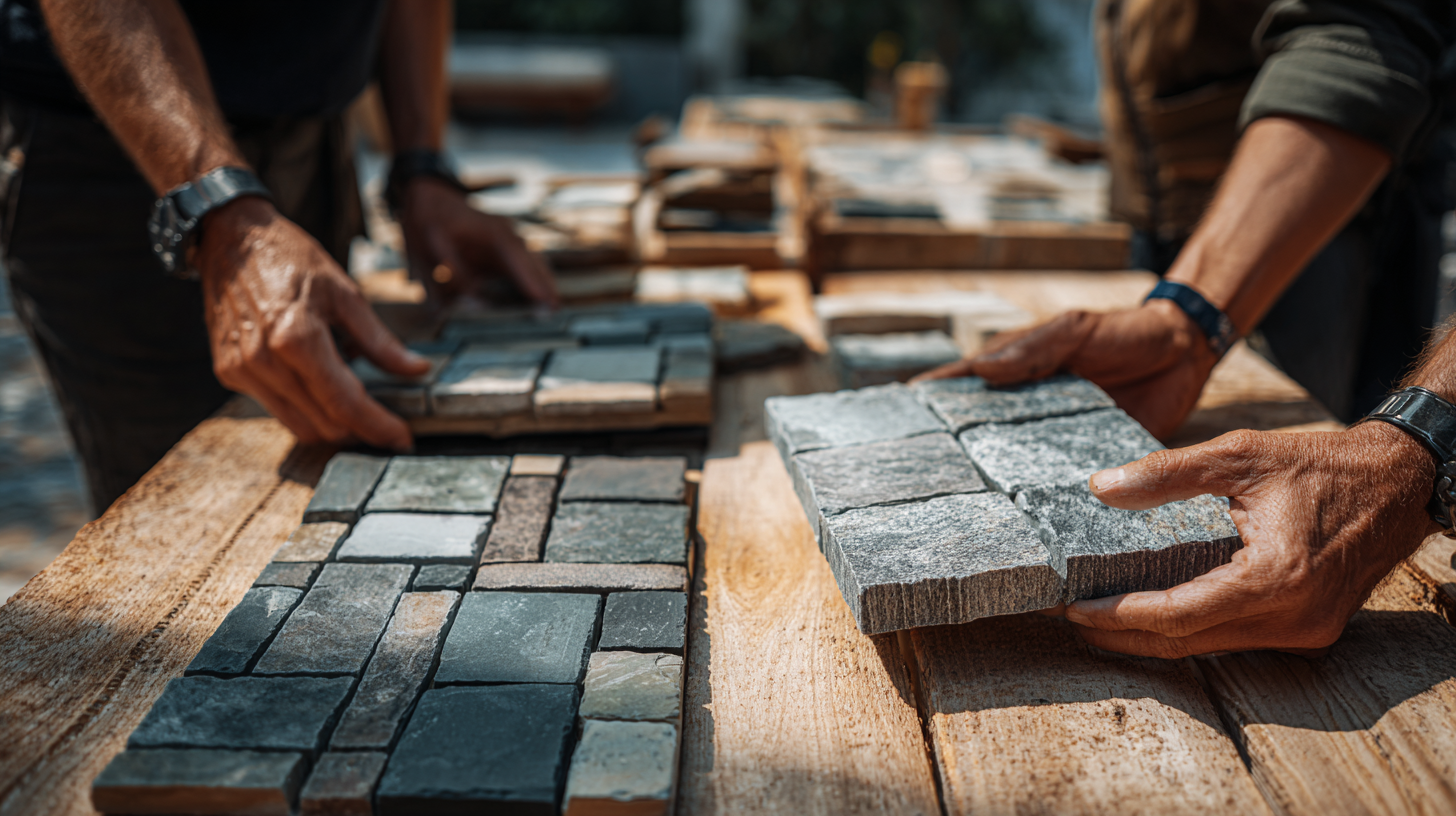
Concrete pavers offer more design flexibility than poured concrete because they are available in dozens of shapes, colors, and textures that can mimic natural stone, brick, or even wood grain, while poured concrete is most naturally finished in gray and requires stamping or staining to achieve decorative effects that can fade or wear over time.
For properties in established Asheville communities, visual continuity with the home’s architecture and surrounding landscape matters. Modern pavers are manufactured to replicate the look of natural materials while maintaining consistent dimensions that simplify complex patterns like herringbone and basket weave. Those patterns add visual sophistication that pairs beautifully with thoughtfully planned perennial and annual garden designs for Asheville properties. Stamped concrete can achieve similar decorative effects at a lower cost, but the stamped surface sits on top of the slab and wears differently than the underlying material. Over time, the pattern can fade, and resealing is required to maintain the appearance. With pavers, the color and texture run through the unit, so surface wear does not change the visual character as dramatically. If you want the organic warmth of natural stone without the full natural stone investment, a quality concrete paver in a warm tone installed in a traditional pattern is a practical path to that aesthetic. For additional context on hardscape material classifications, see natural stone characteristics and classifications.
Natural Stone, Brick, and Gravel: Where They Fit in the Hardscape Materials Comparison
Natural stone, brick, and gravel each serve specific roles beyond the core concrete vs paver patio comparison, with natural stone delivering the longest lifespan and the most authentic mountain aesthetic, brick offering classic warmth when the correct grade is specified, and gravel providing permeable solutions for pathways and drainage areas where rigid surfaces would work against your landscape’s water management needs.
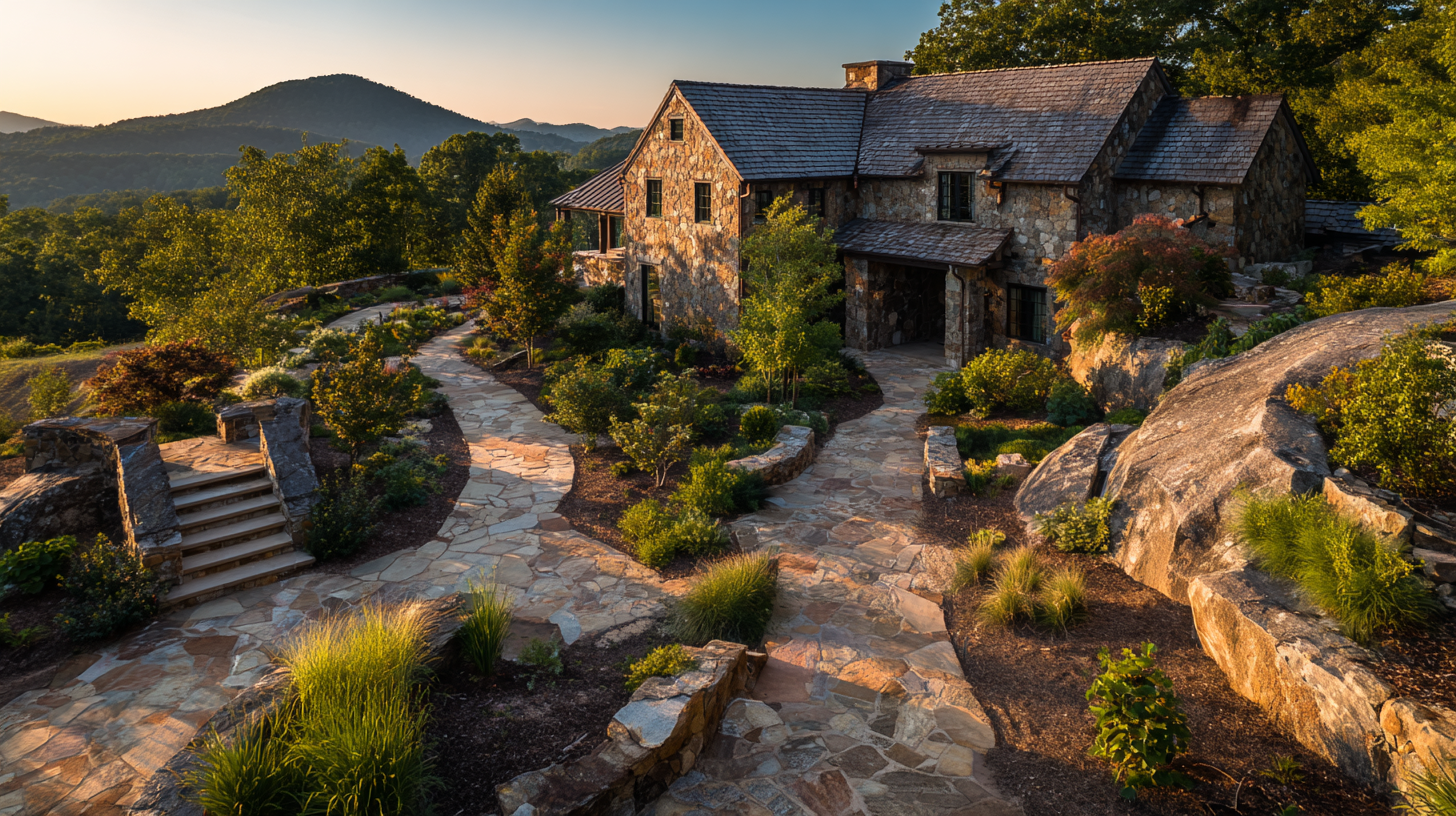
Natural stone, including flagstone, bluestone, and locally quarried fieldstone, carries the structural density to resist Asheville’s freeze-thaw cycles better than any manufactured product. Installed costs run $15 to $25 per square foot, but properly set stone surfaces can last generations with minimal maintenance, much like how native plants thrive in Asheville’s climate by working with natural conditions rather than against them. Each piece carries unique color variations and textures that build visual interest no manufactured material can replicate. Brick brings timeless warmth to walkways and patio borders, but material grade is the deciding factor between a surface that lasts decades and one that cracks within a few winters. Standard building brick lacks the density required for ground-level applications in our climate. Paver-grade brick with higher compression ratings is what our team specifies on every project. Gravel and decomposed granite serve different purposes, specifically informal pathways, garden transitions, and drainage areas where water infiltration is more important than a rigid walking surface. Decomposed granite compacts well to create firm paths that still allow water to move through, complementing garden bed installation projects and combining naturally with proper mulching techniques for low-maintenance landscape zones. Addressing any underlying poor drainage issues in your yard before installation ensures these permeable materials perform at their best. For construction material safety standards, see OSHA safety guidelines for construction materials, and for environmental considerations in material selection, consult EPA environmental resources.
Why Asheville Homeowners Trust Hutch N Son for Hardscape Projects
Hutch N Son Landscaping has served Asheville and Biltmore Forest for over 50 years as a father-and-son family business, and that generational continuity means every recommendation we make is grounded in direct field experience with how each material actually performs in our specific mountain conditions, not in manufacturer specifications written for favorable test environments.
We have watched every material on this page age through Asheville’s real seasons. That experience shapes every recommendation we make. We do not guide you toward a particular surface because it is faster to install or more profitable for us. We listen carefully to your ideas, walk your property to assess drainage patterns, sun exposure, slope, and traffic load, and then recommend the materials and installation methods that will genuinely serve you for years. Every project we complete reflects our family’s reputation in this community, and that accountability is present in every decision we make from base preparation to final joint sand. Building lasting relationships with our clients, not just completing transactions, has been how this family has worked for more than five decades.
Frequently Asked Questions
Which is better for an Asheville patio: concrete or pavers?
For most Asheville properties, concrete pavers perform better than poured concrete over the long term because their interlocking design handles freeze-thaw stress without cracking the entire surface. Poured concrete is more affordable upfront and can last many years when installed over a properly prepared base, but when it does crack in our mountain climate, repairs are more disruptive and rarely invisible. Pavers allow targeted replacement of individual damaged units without disturbing the surrounding surface. The right answer for your property depends on your budget, your desired appearance, and how much ongoing maintenance you are willing to manage, and that is a conversation our team is glad to have with you in person.
How much does a paver patio cost compared to a concrete patio in Asheville?
In Asheville, poured concrete patios typically cost $6 to $12 per square foot installed, while concrete pavers range from $8 to $15 per square foot. Both figures include proper base preparation, which is not optional in our mountain terrain and accounts for a meaningful portion of the total project cost. Natural stone runs $15 to $25 per square foot installed and offers the longest lifespan. Choosing a lower-grade material or reducing base work to lower the initial quote almost always leads to settling, drainage problems, or surface failure within a few years. Our guide on landscaping costs in Asheville covers what drives pricing across different project types and scales.
Which hardscape material holds up best in Asheville’s freeze-thaw winters?
Natural stone holds up best in Asheville’s freeze-thaw conditions because its density and natural composition resist moisture penetration and temperature-driven expansion and contraction better than manufactured surfaces. Flagstone and bluestone specifically handle our mountain temperature fluctuations without cracking or deteriorating over time. Concrete pavers are a strong second choice because their interlocking joint system absorbs movement that would crack a rigid slab. Standard building brick and low-grade concrete in ground-level applications without proper drainage and base preparation are the combinations our team has seen fail most consistently in our climate.
How do I choose between natural stone, pavers, and poured concrete for my Asheville property?
Start with your budget range, then layer in your priorities around appearance, maintenance, and longevity. If longevity and authentic mountain aesthetics are your top priorities and budget allows, natural stone is the strongest performer. If you want a durable, attractive surface at a moderate cost with good repairability, concrete pavers offer the best balance. If upfront cost is the primary constraint and you are confident in proper installation with a well-prepared base, poured concrete can perform well for many years. Your property’s specific drainage patterns, slope, and sun exposure also influence which material will serve you best, and a site assessment with our team takes those variables into account before any recommendation is made.
Can I install a paver patio myself to save money?
Paver installation is technically within reach for a skilled homeowner, but base preparation is where most DIY patio projects fail in Asheville’s mountain terrain. Adequate excavation depth, proper compacted base material, and correct drainage slope are not optional steps, and errors in any of them will cause settling and surface failure within a few seasons regardless of the quality of the pavers themselves. The visible work of laying pavers is satisfying, but the invisible foundational work beneath the surface determines whether your patio holds up for years or begins shifting within one winter. If you are considering a DIY approach, we are glad to talk through what proper base preparation requires for your specific site before you begin.
Start Your Asheville Patio Project with a Team That Knows This Ground
The concrete vs paver patio comparison comes down to your property, your priorities, and the installation quality beneath the surface. After more than 50 years serving Asheville and Biltmore Forest, the Hutch N Son family brings the generational knowledge to help you choose the right material and install it correctly the first time. We listen carefully to your vision, assess your specific site conditions, and build outdoor spaces that stay beautiful and functional for years. Contact us today to talk through your project and get an honest recommendation from a team that has watched every material on this page perform through every season Asheville delivers.