
Key Takeaways
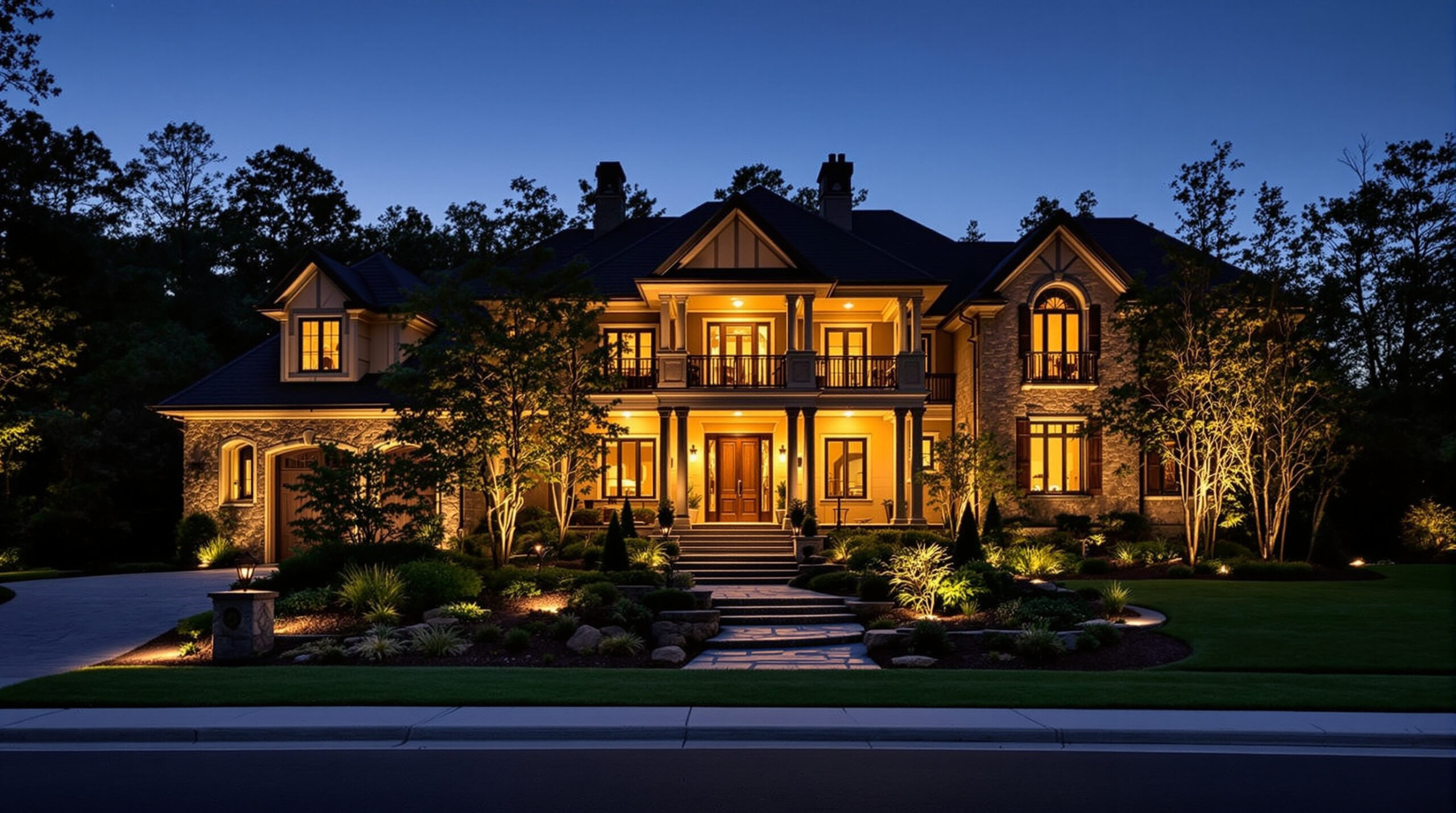
Outdoor lighting ideas for Asheville NC landscaping projects go far beyond decorative appeal. The right fixtures, placement, and light temperatures can make stone pathways safer, highlight native plantings year-round, and add usable hours to patios and outdoor living areas. Planning lighting alongside hardscaping and planting design produces cleaner results and lower installation costs than retrofitting later.
- Path lighting along stone walkways improves safety and frames the journey from street to front door.
- Uplighting mature trees and architectural plants creates dramatic nighttime depth on mountain lots.
- Warm white LEDs in the 2700K to 3000K range complement Asheville’s natural stone and native plant palettes.
- Low-voltage landscape lighting systems vary widely in cost depending on fixture count and scope; get estimates from local lighting contractors for current pricing.
- Integrating lighting during hardscape installation can save significantly compared to retrofitting after construction.
- Timers and smart controllers reduce energy use and extend bulb life significantly over manual switching.
- A proper site analysis before installation prevents glare, light pollution, and fixture placement mistakes that are costly to undo.
Why Outdoor Lighting Transforms Asheville Properties After Dark
Outdoor lighting ideas for Asheville NC landscaping projects matter because mountain terrain creates dramatic elevation changes, shadow pockets, and stone surfaces that look completely different after sunset. Thoughtful lighting turns those features into assets rather than hazards, extending the usable life of outdoor spaces into evening hours and making properties feel more complete across every season.
Asheville sits at elevations that vary across the metro area, with downtown near approximately 2,134 feet above sea level and surrounding neighborhoods ranging higher or lower depending on terrain. That altitude means cooler evenings even in summer, which pushes homeowners outdoors after dark far more than in lower-elevation cities. A patio that catches the last of the mountain sunset becomes even more valuable when ambient lighting allows gatherings to continue past dusk. Stone retaining walls catch uplighting beautifully. Gravel paths take on texture under path fixtures. Planting beds designed around native species like mountain laurel, serviceberry, and black-eyed Susan shift from flat green during the day to layered compositions at night when lighting angles are planned carefully.
Lighting also adds measurable security and safety value. Lighting professionals generally recognize that well-placed exterior lighting can reduce trip-and-fall risks on grade changes by improving contrast at edges and transitions. On the kind of sloped lots common in western North Carolina, that matters. Hutch N Son Landscaping has seen firsthand how clients who invest in pathway and step lighting on terraced yards get years of worry-free evening use that unprepared properties simply cannot offer. Planning lighting from the beginning of a landscape project, rather than adding it afterward, consistently produces better results at lower overall cost — a principle that applies equally to custom landscape design work from concept through completion.
Path Lighting Along Stone Walkways and Steps
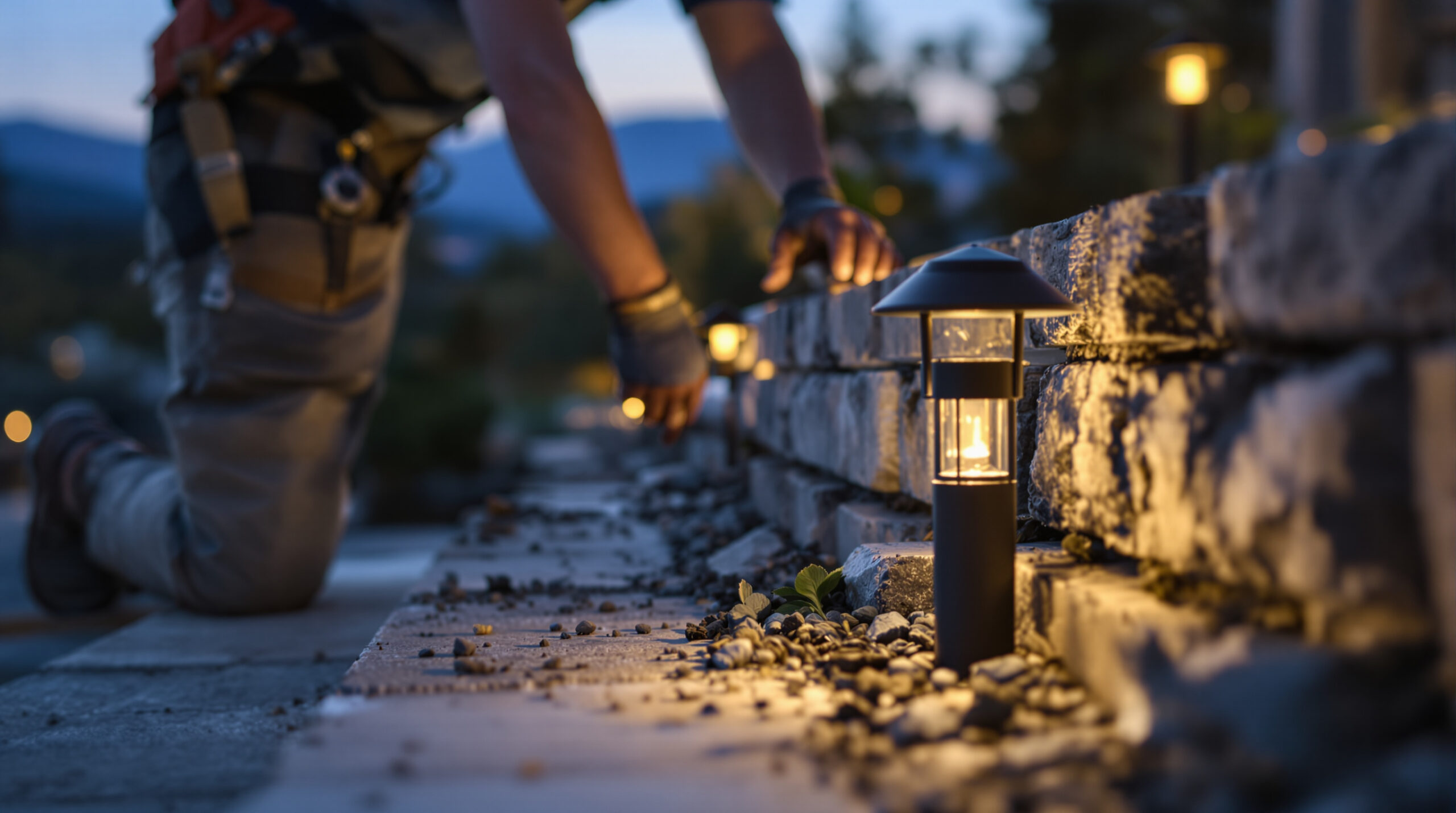
Path lighting placed at regular intervals along stone walkways creates a visual corridor that guides visitors safely from the street, driveway, or parking area to the front door or garden entrance. Spacing should be determined based on fixture output and site conditions to produce overlapping pools of light without visible dark gaps.
What fixture height works best for residential path lights?
Fixtures mounted closer to grade generally produce ground-level illumination without blinding foot traffic. Taller bollard styles work better on wider commercial paths but can feel oversized on the residential scale typical of Asheville neighborhoods like Biltmore Forest. Low-profile mushroom-cap or pagoda-style fixtures sit closer to grade and disappear into planting borders during daylight hours, which is one of the reasons they remain popular on custom residential hardscape projects throughout Asheville.
How much do path light systems cost to install?
A basic path lighting system with eight to twelve low-voltage LED fixtures, a transformer, and buried cable varies in cost depending on local labor rates, materials, and site conditions. More elaborate systems with 20 or more fixtures, zoned transformers, and smart controllers will cost substantially more on longer walkways or multi-section properties. The biggest cost variable is conduit routing around existing hardscape. Installing conduit during stone walkway construction, before pavers are set, can meaningfully reduce trenching costs compared to retrofitting after the fact.
Should path lights connect to a timer or smart controller?
Timer-controlled or photocell-activated systems prevent the common problem of fixtures running all night unnecessarily. Smart Wi-Fi controllers from various manufacturers allow homeowners to set sunrise/sunset schedules from a phone and adjust brightness seasonally. These controllers add to the system cost and can pay back that investment over time through energy savings and reduced bulb replacement frequency. For information on energy-efficient outdoor lighting practices, see resources from the U.S. Environmental Protection Agency. Homeowners considering solar landscape lighting should weigh the tradeoffs in reliability and output before committing to that power source for path systems.
Uplighting Trees, Shrubs, and Native Plantings
Uplighting places fixtures at or just below grade level, angled upward to wash light across tree trunks, canopies, or large shrubs, creating vertical depth that makes flat-looking yards feel like designed spaces after dark. The technique works particularly well on the mature hardwoods and specimen plantings common throughout western North Carolina.
Which trees respond best to uplighting on Asheville lots?
Mature white oaks, river birches with their peeling bark, and Japanese maples with layered branching structures all respond well to uplighting because their texture catches and redirects light in visible ways. Dogwoods uplight beautifully in spring when blooms are present and again in fall with red foliage. Learn more about native trees in the region through local university forestry programs and cooperative extension services. By contrast, evergreen conifers with tight, dense branching absorb light rather than reflecting it, so they require wider-angle flood fixtures at higher lumen outputs to achieve the same visual impact.
What beam angle and color temperature should uplights use?
Narrow spot fixtures work best on single specimen trees to create concentrated drama. Wider flood angles suit multi-trunk trees or large shrub groupings where the goal is washing an entire form rather than highlighting one trunk. Color temperature choices matter enormously in Asheville’s plant palette. Warm white at 2700K to 3000K flatters stone, bark, and autumn-toned foliage. Neutral white at 4000K can wash out warm leaf colors and make native plantings look clinical rather than natural — a consideration worth discussing during a professional landscaping site analysis before fixture types are finalized.
How far from the trunk should uplight fixtures be placed?
A common guideline among lighting practitioners is that fixtures be placed at a distance from the trunk that allows light to wash the full canopy rather than just illuminating bark at the base. The appropriate distance will vary with tree size, species, and fixture output. Placing fixtures too close produces a harsh, theatrical effect that looks unnatural. On sloped lots, the downhill side of the tree typically needs a slightly higher lumen output to compensate for the angled viewing line from the street or patio.
Patio and Outdoor Living Area Accent Lighting
Patio lighting serves functional and atmospheric purposes simultaneously, and getting the balance right requires thinking about both task zones and ambient zones within the same outdoor room. Cooking areas, dining surfaces, and steps need directed light for safety; seating areas and garden borders benefit from softer, diffuse sources that create mood without glare. For workplace and residential safety standards related to outdoor lighting design, consult guidance from OSHA.
What types of fixtures work best on stone patios?
In-ground well lights set flush into flagstone joints or patio edges create clean, integrated looks that disappear during daylight and glow at night without interrupting the hardscape surface. Wall-mounted sconces on retaining walls or outdoor kitchen structures add mid-level light that reduces harsh shadows across the seating area. String lights suspended between posts or pergola beams remain popular for their warm ambient contribution, though they function best as a supplementary layer over functional task lighting rather than as the primary source.