Key Takeaways
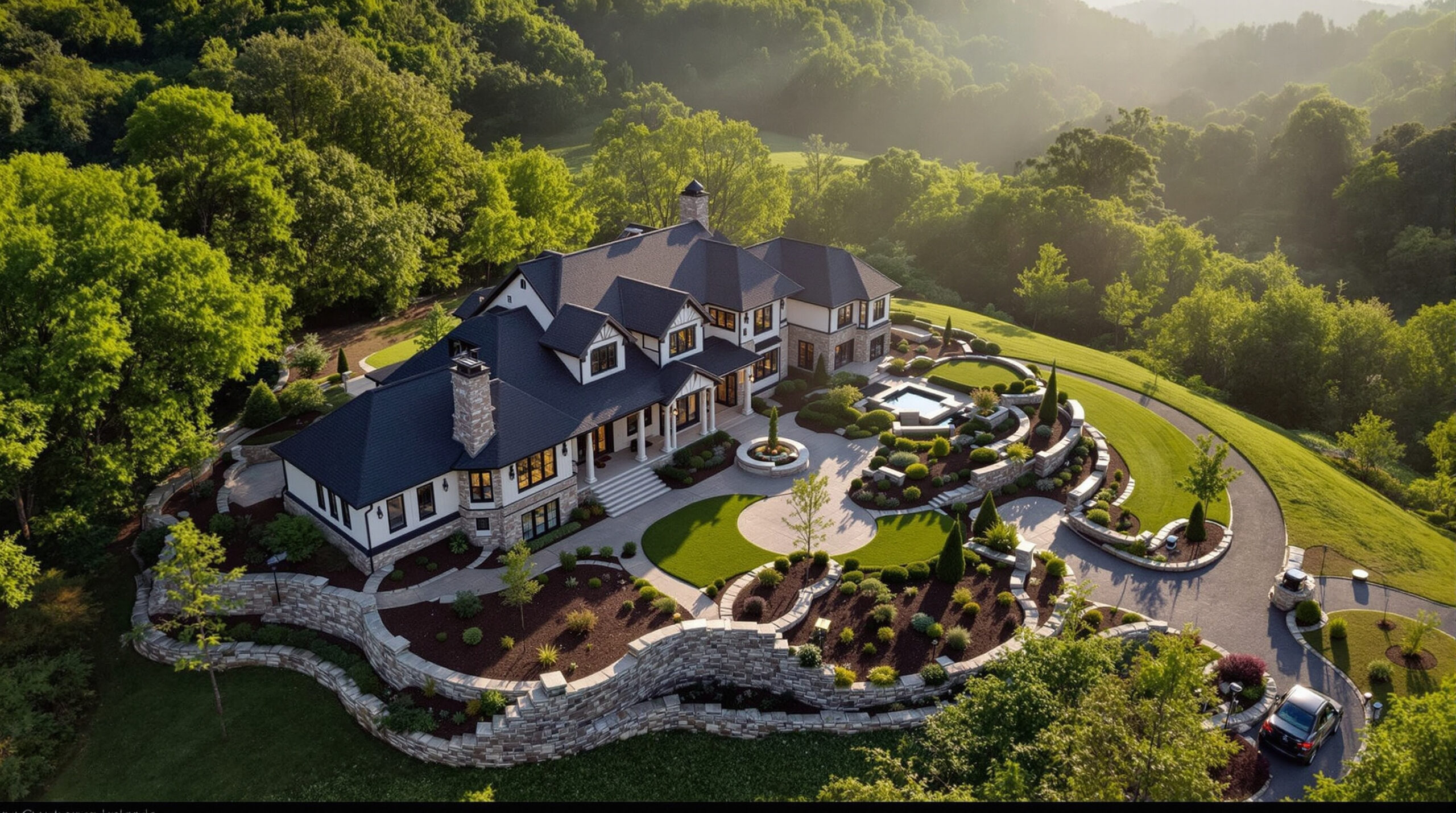
Custom landscape design in Asheville, NC requires matching plant selections, grading strategies, and hardscape materials to Western North Carolina’s mountain terrain, elevation shifts, and humid subtropical climate. Homeowners who work with a local contractor through a structured process — from initial consultation through installation — get outdoor spaces built to endure the region’s seasonal extremes while reflecting their personal vision.
- A thorough site assessment accounts for soil type, drainage patterns, slope, sun exposure, and microclimates before any design work begins.
- Native and climate-adapted plants reduce long-term maintenance needs and perform better in Asheville’s variable mountain conditions.
- Hardscape elements like retaining walls, stone walkways, and patios provide structure and control erosion on sloped residential lots.
- Phased installation allows homeowners to spread costs over time without sacrificing design cohesion.
- Post-installation care — fertilization, overseeding, and irrigation scheduling — determines whether the finished design thrives year after year.
- Local experience with Western North Carolina’s specific terrain and plant palette separates a quality contractor from a generic provider.
What Custom Landscape Design in Asheville NC Actually Involves
Custom landscape design in Asheville, NC is the process of creating an outdoor plan built specifically around a property’s terrain, the homeowner’s goals, and the region’s climate conditions — not a template pulled from a catalog. Asheville sits at elevations ranging from roughly 1,900 to 2,400 feet, with a humid subtropical climate that produces cold winters, hot summers, and substantial annual rainfall averaging around 47 inches. Those conditions shape every design decision, from which plants survive a late frost in April to how a retaining wall must be engineered on a 15-degree slope. For more information on climate conditions and hardiness zones, refer to the USDA Plant Hardiness Zone Map.
Custom landscape design differs from standard landscaping in scope and specificity. A custom project begins with a detailed landscaping site assessment and ends with a cohesive, property-specific plan that accounts for drainage, grading, hardscape, softscape, lighting, and long-term maintenance. It treats the yard as a system, not a collection of separate jobs. Homeowners in established communities like Biltmore Forest often manage properties with mature trees, grade changes, and existing hardscape that all need to be worked around rather than ignored. That level of complexity demands a local contractor who knows Western North Carolina’s terrain from direct experience, not textbook theory.
Hutch N Son Landscaping has worked with Asheville-area homeowners for over 50 years, which means the team has watched how this region’s mountain climate affects plants, soil, and structures across decades. That generational knowledge shapes every consultation, site plan, and installation the company undertakes. The sections below walk through exactly what to expect at each stage of a custom design project in this area.
The Initial Consultation: Setting the Foundation for Your Design
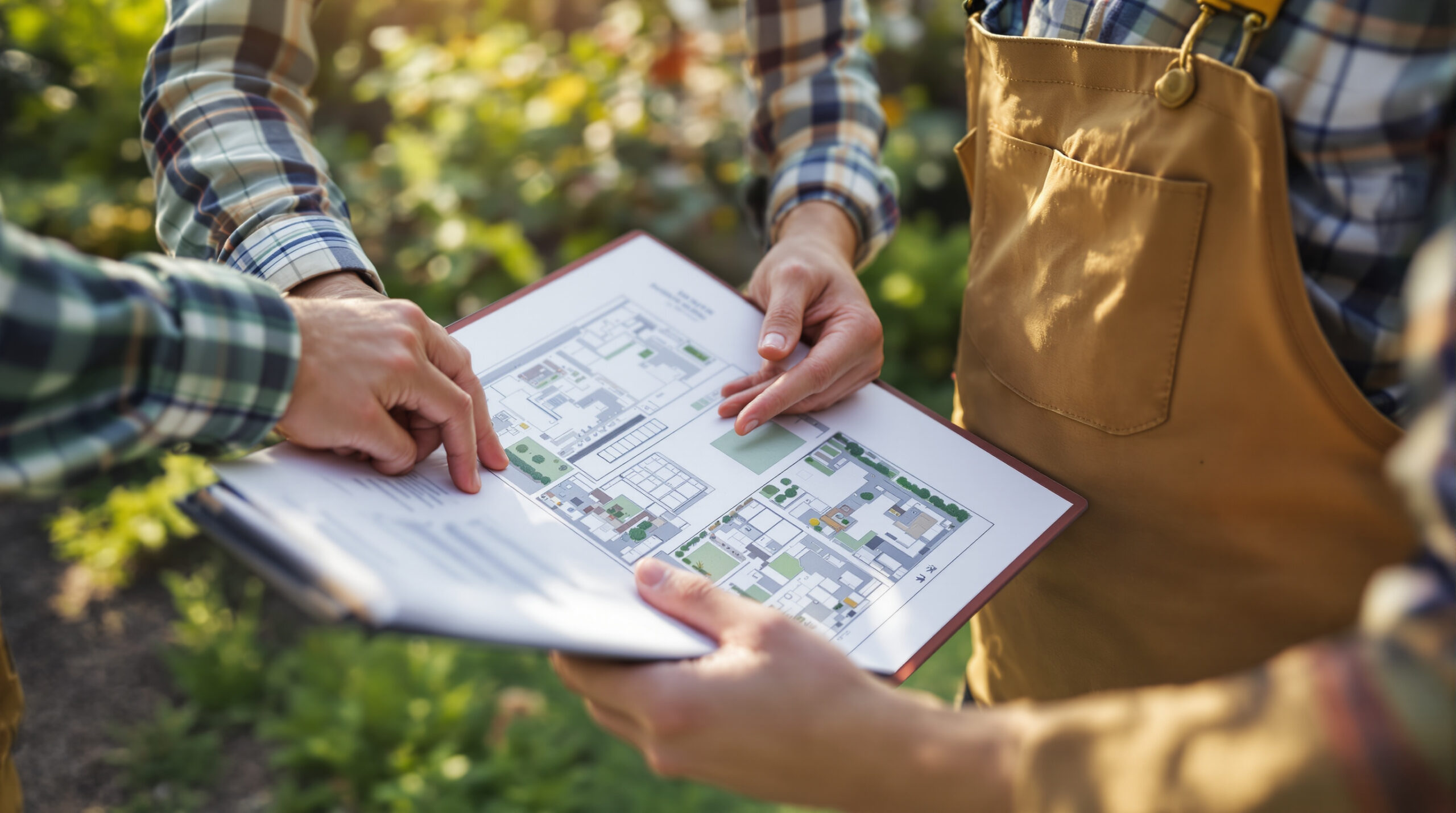
The initial consultation is where a custom landscape design project either gets built on solid ground or sets itself up for misalignment later. A well-structured consultation covers goals, budget range, timeline expectations, and site conditions before a single design sketch is drawn. Homeowners who arrive prepared with photos of spaces they admire, a rough sense of how they use their yard, and any known drainage or grading problems will get more out of this first meeting.
What should a homeowner bring to the first landscaping consultation?
A homeowner benefits most from bringing photos of the existing yard from multiple angles, any prior surveys or site plans, a list of how the space will be used (entertaining, children’s play, pet areas, gardens), and a realistic budget range. Budget transparency matters because custom design projects in Asheville typically range from $15,000 for smaller residential installations to well over $75,000 for full-property transformations with hardscape, planting, and irrigation. Knowing the range up front lets the designer prioritize features that matter most rather than presenting a plan that needs to be cut in half.
What questions should a contractor ask during the consultation?
A qualified local contractor asks about existing drainage problems, sun and shade patterns at different times of day, how much ongoing maintenance the homeowner wants to manage personally, and whether the project needs to be completed all at once or can be staged. They should also ask about HOA restrictions, utility line locations, and any existing plants the homeowner wants preserved. The answers directly shape the design approach. Contractors who skip these questions tend to produce plans that look good on paper but fail in practice.
How long does the initial consultation typically take?
For a custom design project on a residential lot in Asheville, expect an initial consultation to run 60 to 90 minutes on-site. More complex properties with significant grade changes, drainage concerns, or large acreage may require a second visit before the contractor can quote the design phase accurately. Detailed guidance on what to expect during a landscaping consultation in Asheville, NC can help homeowners prepare and make the most of that time.
Site Assessment: Reading the Land Before Drawing a Line
A proper site assessment is the technical backbone of any custom landscape design project in Western North Carolina. It translates what the homeowner wants into what the property can actually support. Skipping or rushing this step is one of the most common reasons outdoor installations fail within three to five years.
What soil and drainage factors matter most on Asheville-area properties?
Asheville and the surrounding mountain region contain a mix of clay-heavy soils, rocky subsoils, and pockets of loam that drain at very different rates. Clay soils common in many residential areas retain moisture and become compacted, creating drainage problems that drown root systems over time. A site assessment should include a soil compaction test, a pH reading (most Western North Carolina soils run between 5.5 and 6.5, slightly acidic), and observation of drainage patterns during or after rainfall. Areas where water pools for more than 30 minutes after a moderate rain need drainage correction before any planting or hardscape is installed. For additional guidance on soil management, consult the Natural Resources Conservation Service (NRCS).
How do slope and elevation affect the design plan?
Grade changes are nearly universal on Asheville residential properties, and they affect every element of the design. Slopes steeper than 3:1 (three feet of horizontal run per one foot of rise) typically require retaining structures to prevent erosion and create usable flat space. Elevation changes also create microclimates where temperatures can vary by 5 to 10 degrees Fahrenheit over short distances on the same lot. A north-facing slope stays cooler and wetter than a south-facing slope just 50 feet away. That difference determines which plant species will thrive in each zone. According to the American Society of Landscape Architects, a complete landscape site analysis checklist that maps these microclimates produces planting plans with significantly higher long-term survival rates than generic designs that treat the whole lot as uniform.
What role does sun exposure mapping play in the assessment?
Sun exposure mapping tracks how much direct sunlight each area of the property receives across different seasons. In Asheville, tree canopy changes dramatically from spring through fall, meaning a section of yard that gets full sun in April may be heavily shaded by July once the canopy fills in. Recording these patterns across at least two site visits at different times of day gives the designer accurate data to match plant selections to actual light conditions rather than assumptions.
Plant Selection for Western North Carolina’s Climate and Terrain
Plant selection for a custom landscape design in Asheville, NC must account for USDA Hardiness Zones 6b to 7a, the region’s variable frost dates, heavy summer rainfall, and occasional drought stress between August and October. Getting this right means choosing species that perform across those conditions rather than plants that look good at the nursery but fail in the ground within two seasons.
Which native plants work well in Asheville residential landscapes?
Native species adapted to Western North Carolina include mountain laurel (Kalmia latifolia), Eastern redbud (Cercis canadensis), serviceberry (Amelanchier arborea), oakleaf hydrangea (Hydrangea quercifolia), and native ferns including cinnamon fern and interrupted fern. These species evolved alongside local soil conditions, rainfall patterns, and wildlife, which means they generally require less supplemental irrigation, less fertilizer, and fewer pesticide interventions than non-native ornamentals. Information on native plant species and their characteristics is available through the U.S. Forest Service.