Key Takeaways
Damaged grass in Asheville responds best when the renovation method matches the actual cause and severity of the damage. Patchy lawns, thin turf, and fully dead areas each call for a different approach, from targeted reseeding to full sod replacement. Choosing the wrong method wastes time and money, so accurate assessment always comes first.
- Assess damage level first: patchy, thin, or fully dead each require different lawn renovation methods.
- Dethatching and aeration restore lawns where the soil is compacted or thatch buildup is blocking grass recovery.
- Targeted reseeding works well for thin or patchy areas where the soil structure is still sound.
- Sod replacement delivers fast, reliable results for severely dead zones or high-visibility areas.
- Asheville’s mountain climate and clay-heavy soils make professional assessment critical before any renovation begins.
Reading Your Lawn Before Choosing a Renovation Approach
Lawn renovation methods for damaged grass work best when the method fits the problem, not the other way around. A lawn that looks dead in July may simply be dormant from heat stress, while thin grass in a shaded corner may signal a soil pH problem rather than poor seed quality. Accurate diagnosis saves homeowners from applying the wrong fix entirely. A thorough landscape problems diagnosis is often the most valuable first step before any work begins. At Hutch N Son Landscaping, we have spent many years reading Asheville lawns, and we know that mountain terrain, elevation shifts, and clay-heavy soils create damage patterns you rarely see at lower altitudes. Before any renovation work begins, the right question is always: what actually caused this damage, and how deep does it go?
Identifying the Three Levels of Lawn Damage
Lawn damage falls into three broad categories, and each one points toward a specific set of solutions. Recognizing which category your lawn falls into is the foundation of any successful restoration plan.
Patchy Damage
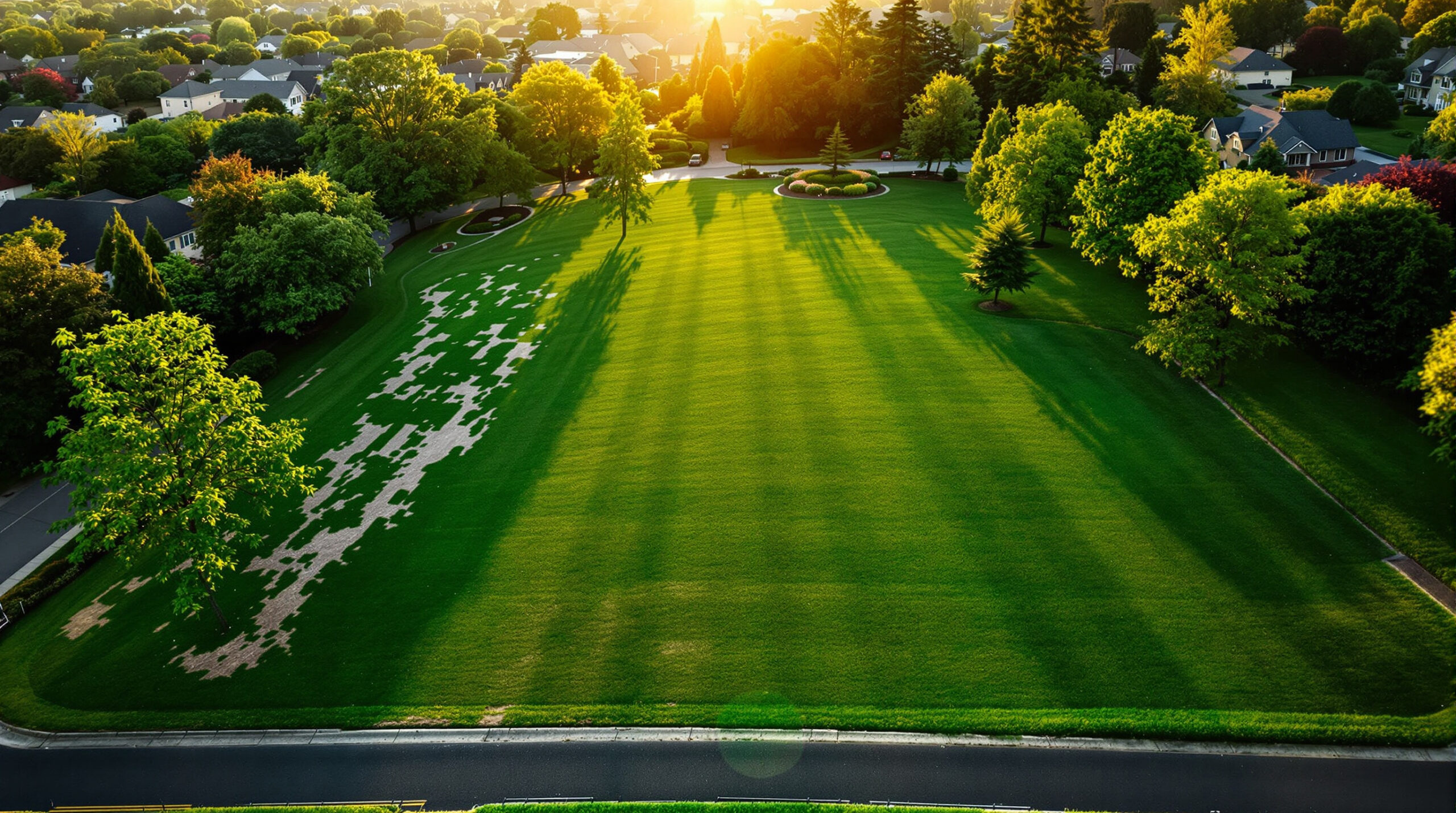
Patchy lawns show irregular dead or thin spots surrounded by otherwise healthy grass. Common causes include fungal disease, pet waste, grub activity beneath the soil surface, or localized drought stress. The surrounding turf is usually strong enough to support targeted repairs. In these cases, removing dead material, loosening the soil in the affected area, and applying the correct seed variety for Asheville’s climate typically produces solid results within a season. Understanding how to fix bare spots in your lawn gives homeowners a practical starting point for these localized repairs.
Thin or Weak Turf
Thin turf covers the whole lawn but lacks density. Grass blades appear sparse, soil shows through easily, and foot traffic leaves visible wear paths quickly. This pattern usually points to compacted soil, heavy thatch buildup, or years of insufficient fertilization. The lawn is alive but struggling to support itself.
Fully Dead Grass
A fully dead lawn shows no green growth even after adequate rain. When you tug the grass and it lifts from the soil in mats with no root resistance, it is gone. This level of damage requires more aggressive renovation, and in many situations, sod replacement is the most practical path forward. For more information on grass health assessment, see Wikipedia’s Lawn article.
Dethatching and Aeration for Thin or Compacted Lawns
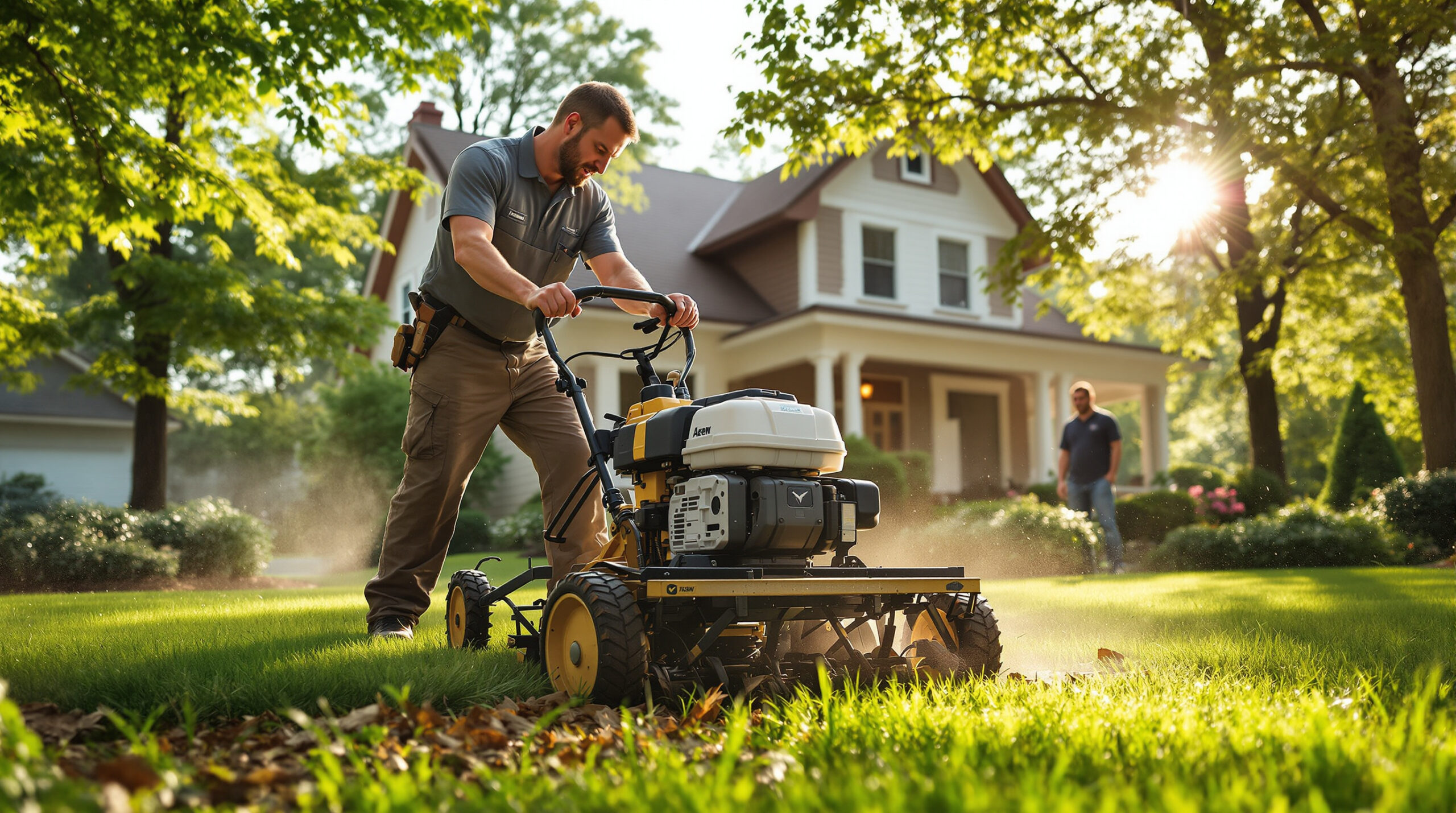
Dethatching and aeration address the underlying conditions that prevent grass from thriving, making them the right choice for thin, weak turf before more costly work is considered. Thatch is the layer of dead grass stems and roots that accumulates between the soil surface and living blades. When it exceeds half an inch, it blocks water, air, and fertilizer from reaching grass roots. Dethatching removes that barrier mechanically, giving recovery a clear path. Aeration follows a different logic. A core aerator pulls small plugs of soil from the ground, opening channels for oxygen, water, and nutrients to penetrate compacted clay. Asheville’s heavy clay soils compact quickly under foot traffic and rainfall, which is a direct cause of thin turf that many homeowners misread as a watering or fertilizing problem. In our experience, aeration followed by overseeding reliably improves turf density when the root zone has been oxygen-deprived. Both services are typically performed in early fall for cool-season grasses or late spring for warm-season varieties, timing that aligns with Asheville’s growing seasons. Following aeration with a proper overseeding after aeration plan significantly improves the density and long-term health of recovering turf.
Reseeding Strategies for Patchy and Recovering Lawns
Targeted reseeding rebuilds grass density in areas where soil structure remains intact and damage is limited in scope. The process involves removing dead material, loosening the top quarter inch of soil with a rake or slice seeder, applying seed at the correct rate, and maintaining consistent moisture through germination. Choosing the right seed variety matters more than most homeowners realize. Asheville sits at an elevation of approximately 2,100 feet, and that elevation shifts the preferred grass species compared to the North Carolina Piedmont below. Understanding the differences between fescue vs Bermuda grass helps homeowners select the variety best suited to their specific conditions before any seed is applied. Tall fescue performs reliably in this region because it handles both the cooler mountain nights and the periodic summer heat. Seed selection tied to local elevation and soil type is one of the biggest factors in whether a reseeding project succeeds or fails. Using seed blends developed for lower elevations in mountain regions leads to poor establishment almost every time. Overseeding a thin lawn in early September, when soil temperatures are still warm but air temperatures are cooling, gives seed the ideal germination window in the Asheville area. Timing is not a minor detail here. It is the difference between a full stand of grass by November and a bare lawn going into winter. For environmental best practices in lawn care, consult EPA guidance on sustainable landscaping.
Sod Replacement for Severe or Fully Dead Zones
Sod replacement is the direct solution when grass is beyond recovery and a fast, reliable result is required. Sod delivers an established root system and visible green coverage within days rather than weeks, which matters in high-traffic areas, front lawns with curb appeal concerns, or erosion-prone slopes where bare soil cannot wait for seed germination. The installation process involves removing the dead material, grading the soil surface to eliminate low spots that collect standing water, amending soil as needed, and laying sod in tight, staggered rows. Proper soil preparation determines how well sod roots establish, and shortcuts at this stage lead to thin patches reappearing within a year. In our experience, poor soil contact during sod installation is one of the most common reasons newly laid sod fails to root properly. Grading and soil amendment before installation are not optional steps. In Asheville’s climate, early fall is again the preferred installation window for cool-season sod, giving roots time to knit into the soil before winter dormancy. Following a new sod care and watering schedule in the weeks after installation is essential to ensure roots establish properly before cold weather arrives. Slopes and terraced areas common across this region’s residential lots may also require erosion fabric or light pinning to hold sod in place while roots establish. For workplace safety considerations during landscape projects, review OSHA safety standards.
Frequently Asked Questions
How do I know if my lawn needs aeration or sod replacement?
If your grass is thin but still alive across most of the lawn, aeration and overseeding are the appropriate first steps. Sod replacement makes more sense when large sections show no root activity, no green growth after rain, and grass lifts away from the soil in mats. A professional assessment helps clarify which category your lawn falls into before any work begins.
What is the best time of year for lawn renovation in Asheville, NC?
Early fall, typically September through mid-October, is the preferred window for most cool-season lawn renovation in Asheville. Soil temperatures are warm enough for seed germination or sod rooting, while cooler air temperatures reduce stress on recovering grass. Spring can work for warm-season varieties, but fall timing produces the strongest establishment results for this region’s climate.
Can I overseed directly over dead grass without removing it first?
Overseeding over dead grass rarely produces strong results. The dead material blocks seed-to-soil contact, preventing proper germination. Removing or dethatching the dead layer before seeding gives new seed the best chance of establishing successfully.