
Landscape Problems Diagnosis Solutions for Asheville Yards
Key Takeaways
Diagnosing landscape problems early saves you time, money, and the heartache of watching beautiful outdoor spaces decline. Whether your yard faces drainage issues, dying turf, pest damage, or poor soil health, understanding the root cause before reaching for a quick fix is what separates lasting results from repeated frustration.
- Accurate diagnosis always comes before treatment — guessing wastes time and money.
- Asheville’s mountain terrain creates specific drainage and erosion challenges unique to this region.
- Soil health is the foundation of every healthy landscape and is often overlooked.
- Pest and disease problems can mimic nutrient deficiencies, so visual ID matters.
- A trusted local landscaping partner can spot what homeowners often miss.
Why Landscape Diagnosis Matters More Than the Fix Itself
Most homeowners notice the symptom first. Yellow grass. A shrub that won’t stop wilting. A corner of the yard that stays soggy days after rain. The instinct is to act fast, grab a product off the shelf, or start digging. But applying the wrong solution to a misidentified problem rarely ends well. Over 50 years of working across Asheville properties has taught us one consistent truth: the fix only works when you’ve correctly named what’s broken. Landscape problems diagnosis and solutions go hand in hand, and skipping the first step almost always guarantees a return visit to the same frustrating spot in your yard.
Common Landscape Problems and How to Read the Signs
Every yard tells a story if you know how to read it. Asheville’s residential terrain is especially expressive, because mountain soil profiles, elevation shifts, and seasonal rainfall create a wide range of conditions on a single property. Recognizing what you’re looking at is the first skill a homeowner needs to develop.
Drainage and Erosion Problems
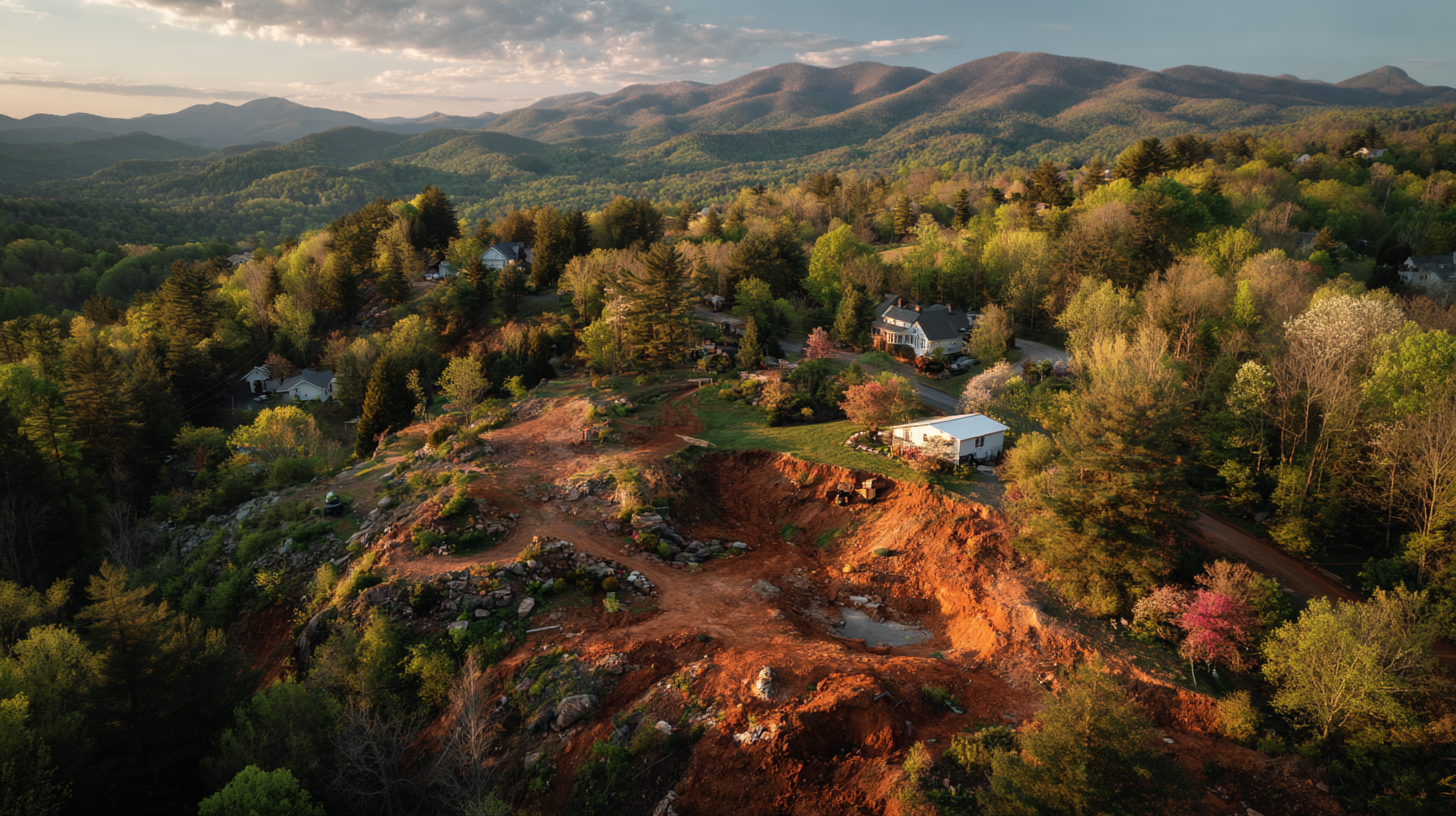
Standing water that lingers more than 24 hours after rain signals a drainage issue, not just wet weather. In Asheville, slope and clay-heavy soils often work against each other, trapping water at low points or sending it rushing across bare ground. Erosion shows up as exposed roots, washed-out mulch channels, and soil streaking across hardscape surfaces. According to the Natural Resources Conservation Service, compacted clay soils can reduce water infiltration by up to 80 percent compared to healthy loam. A proper diagnosis looks at grade, soil composition, and existing drainage infrastructure before recommending French drains, regrading, or planted swales.
Turf and Plant Health Decline
Yellow or brown patches in a lawn can mean a dozen different things. Overwatering, underwatering, fungal disease, grub activity, compaction, and pH imbalance all produce similar discoloration. The distinction matters. A lawn suffering from fungal brown patch needs a fungicide and adjusted irrigation, not fertilizer. Applying nitrogen to a diseased lawn often accelerates the problem. “The most common mistake we see is homeowners treating symptoms rather than causes,” says Dr. Mike Klosowski, certified horticulturist and extension specialist. “A soil test and a careful site observation will reveal more than any product label.”
Pest and Disease Identification
Insect damage and disease damage look remarkably similar in early stages. Lace bugs, spider mites, and scale insects all cause stippling and bronzing on foliage. Fungal infections produce similar patterns. The key diagnostic step is checking the underside of leaves, examining the soil line for insect activity, and checking for frass or webbing. Asheville’s humid summers create ideal conditions for both fungal disease and soft-bodied pests, so timing your scouting after warm, wet spells catches problems early. The University of North Carolina at State provides excellent regional pest calendars that help homeowners know what to look for each season.
Soil Health: The Root of Most Landscape Problems
Soil is where almost every landscape problem begins or ends. Asheville properties often sit on clay subsoil layered beneath a thin band of workable topsoil. Construction activity, grading, and years of compaction can strip that topsoil entirely, leaving plants struggling in a medium that drains poorly, holds nutrients unevenly, and resists root penetration.
A soil test from the U.S. Department of Agriculture costs very little and returns pH, macronutrient levels, and organic matter content. That data tells you whether you’re dealing with nutrient deficiency, pH-related lockout that requires lime application, or a structural problem that requires aeration, amendment, or both. “Soil biology drives everything above ground,” says Lee Reich, garden scientist and author. “When the soil ecosystem is functioning properly, plants are naturally more resistant to pests and disease.” We’ve seen beautifully designed Asheville landscapes fail year after year simply because the soil beneath them was never addressed. Getting that foundation right is not optional. It’s the starting point for any reliable landscape problems diagnosis and solutions plan.
Our approach at Hutch N Son follows the same framework we’ve used for generations: observe carefully, test before treating, and build solutions that address causes rather than just symptoms. If you want to understand how our problem-solving philosophy applies to your specific property, our creative landscaping approach outlines how diagnosis shapes every project we take on.
When to Call a Professional for Landscape Diagnosis
Some problems are genuinely within a homeowner’s reach. Mulch replenishment, basic pruning, and irrigation adjustments are learnable skills. But certain signs call for professional eyes before the situation becomes expensive.
Recurring problems are the clearest signal. If the same area of your yard fails year after year despite your efforts, the underlying cause has not been found. Large-scale drainage failures, structural retaining wall failures, and widespread disease events across multiple plant types all require professional assessment. A trained eye can distinguish between a grading problem and a soil compaction problem, two issues that look identical from the surface but require completely different responses. A thorough landscape site analysis is often the most effective starting point for uncovering what’s really driving persistent failures.
“Landscape problems are often interconnected in ways that aren’t obvious at first glance,” says Marcus Bridgewater, landscape architect and educator. “A drainage issue can cause root rot, which weakens plants, which invites secondary pest infestations. Treating the pests without fixing the drainage means you’ll be treating pests every season.” That interconnected thinking is what generational experience builds. After more than five decades of working across Asheville and Biltmore Forest properties, we’ve seen how problems compound when the diagnosis misses the chain of causes. Calling in a professional landscaper near you early almost always costs less than fixing compounding damage later.
Frequently Asked Questions
How do I know if my lawn problem is disease or drought stress?
Drought stress typically causes uniform browning that follows sun exposure patterns, and grass blades will fold or roll before turning brown. Disease patterns tend to be irregular, circular, or follow drainage paths. Check the soil moisture before drawing conclusions. If the soil is moist but the grass still looks stressed, disease or compaction is more likely than drought.
What causes yellow patches in an otherwise green lawn?
Yellow patches can result from grub activity, soil pH imbalance, fungal infection, dog urine, or localized compaction. Dig into the yellow area and check the root zone for grubs or rot. A soil test will confirm whether pH or nutrients are the culprit. Pattern and location often help narrow the cause significantly. Understanding how to fix bare spots in your lawn once you’ve identified the cause can help you restore affected areas effectively.
Why does water pool in my yard after every rain?
Pooling water usually points to one of three problems: compacted or clay-heavy soil with poor infiltration, negative grade directing water toward a low point, or a blocked or absent drainage outlet. Asheville’s terrain makes this especially common on sloped lots where water collects at natural grade transitions.
Can landscape problems spread from one plant to another?
Yes. Fungal diseases like powdery mildew and certain bacterial infections move plant to plant through water splash, wind, and contact. Pest populations expand rapidly once established. Removing affected material promptly, improving air circulation, and avoiding overhead irrigation are essential disease management strategies supported by plant pathology research.