Key Takeaways
Lawn renovation in western North Carolina requires more than a bag of seed and good intentions. WNC’s clay-heavy soils, dense tree canopy, and mountain climate create conditions that routine mowing and fertilizing cannot fix. A full renovation addresses compaction, bare patches, weed dominance, and drainage problems at the root level through grading, soil amendment, overseeding, and sod installation.
- Clay soils common across WNC compact quickly and block root oxygen, water, and nutrient movement.
- Shade from mature hardwood canopy requires shade-tolerant turf species and adjusted seeding windows.
- Core aeration before overseeding improves germination rates by 40 to 60 percent in compacted lawns.
- Soil pH in WNC frequently runs between 5.0 and 5.8, too acidic for most turf grasses without lime application.
- A proper renovation sequence follows a defined order: soil test, grading, amendment, aeration, seeding or sod, and irrigation setup.
- Fall seeding between mid-August and mid-October produces the strongest cool-season turf establishment in mountain elevations.
- Skipping steps in the renovation process leads to repeat failures within one to two growing seasons.
Why WNC Lawns Break Down Faster Than Homeowners Expect
Lawn renovation in western North Carolina is often necessary because Asheville-area soils and climate create stress conditions that slowly overwhelm even well-maintained turf. The region’s red clay base compacts under foot traffic, freeze-thaw cycles, and heavy rainfall faster than looser soils found in the Piedmont or coastal areas. When compaction sets in, grass roots cannot reach adequate oxygen or moisture, and the lawn begins a slow decline that fertilizer and mowing cannot reverse. Add persistent shade from oak, maple, and tulip poplar canopy, and many WNC properties face two stressors simultaneously: poor soil structure and low light. Understanding why lawns degrade here is the first step toward a renovation plan that actually holds.
Hutch N Son Landscaping has worked across Asheville and surrounding communities for over 50 years, observing how the same mountain terrain variables affect turf performance season after season. The clay subsoil that appears throughout Buncombe County retains water during wet springs, then cracks and sheds water during summer dry spells, creating inconsistent moisture at the root zone. Elevation also matters. Properties above 2,500 feet experience shorter growing seasons, later last-frost dates, and nighttime temperatures that can drop 15 to 20 degrees below valley floors even in June. These realities mean that a renovation plan built on flat-country assumptions will underperform in WNC. Every assessment has to begin with the site itself, not a generic checklist.
What does clay soil actually do to grass roots?
Clay particles are flat and stack tightly together under pressure, reducing pore space where roots, air, and water should move freely. A compacted clay lawn can have bulk density readings above 1.6 grams per cubic centimeter, a threshold at which most turf grass roots physically struggle to penetrate deeper than two to three inches. Shallow roots mean the lawn depends entirely on surface moisture and cannot tolerate drought, heat, or foot traffic without visible stress.
How does tree canopy make renovation harder in this region?
Mature hardwoods in WNC communities intercept 60 to 80 percent of available sunlight in full leaf. Turf grasses need a minimum of three to four hours of direct sun to sustain themselves, and most perform best with six or more. Under heavy canopy, even shade-tolerant species like fine fescue struggle. Root competition from trees also draws moisture and nutrients away from grass, compounding the shade stress. Renovation under canopy requires species selection, thinning pruning decisions, and realistic expectations about turf coverage.
Why does WNC rainfall not fix drought stress in clay lawns?
Compacted clay becomes hydrophobic during dry periods. When rain arrives, water sheets across the surface rather than infiltrating the root zone. This runoff pattern causes erosion on sloped WNC properties while leaving roots dry. Amendment with organic matter and aeration break up this cycle by creating channels for water movement, but those steps must precede seeding or sod for results to last.
Reading the Warning Signs That Routine Care Cannot Fix
A lawn signals the need for full renovation through a recognizable set of symptoms that persist despite regular mowing, fertilization, and spot treatments. Bare patches covering more than 40 percent of a lawn area indicate systemic failure rather than isolated problems. Weed populations dominated by broadleaf species like plantain, chickweed, or wild violet suggest that turf density has dropped below the threshold where grass can outcompete unwanted plants. Heavy moss growth, especially on north-facing slopes or under canopy, points to compaction, excess moisture, and low soil pH working together. Thatch layers exceeding half an inch reduce seed-to-soil contact and block water infiltration. When three or more of these conditions appear simultaneously, renovation is more cost-effective than continued maintenance spending that produces diminishing returns.
How much bare area triggers a full renovation versus spot repair?
Industry guidelines from the University of Georgia Cooperative Extension suggest that when bare or thin areas cover more than 50 percent of the total lawn, full renovation is more efficient than overseeding patches individually. At lower percentages, targeted aeration and overseeding can restore density. The threshold is not arbitrary. Spot repairs in heavily degraded lawns often fail because the underlying soil conditions that caused the bare areas remain unchanged across the entire property.
What does thatch buildup look like and why does it matter for WNC lawns?
Thatch is a layer of partially decomposed stems, roots, and organic debris that accumulates between the green leaf blades and the soil surface. A quarter-inch layer is normal and slightly beneficial. Anything above half an inch begins to repel water, harbor disease organisms, and prevent seed germination. In WNC’s humid climate, thatch decomposes more slowly than in drier regions, and it can build to over an inch in fescue lawns that are not periodically dethatched or core aerated.
When should a homeowner call a professional instead of trying DIY repair?
DIY repair makes sense for bare spots smaller than a few square feet on otherwise healthy turf. When grading problems, persistent drainage issues, soil pH below 5.5, or weed coverage above 50 percent are involved, professional assessment prevents wasted seed, time, and money. A landscaping site assessment in Asheville, NC identifies the root causes before any product is purchased or installed.
Soil Testing and Amendment: The Foundation Nobody Skips
Soil testing is the non-negotiable first step in any legitimate lawn renovation in western North Carolina. Without knowing the pH, nutrient levels, and organic matter percentage, amendment decisions are guesswork. The NC Department of Agriculture and Consumer Services offers soil testing for a nominal fee, and results return within two to three weeks during off-peak periods. Most WNC lawns test between pH 5.0 and 5.8. Tall fescue, the dominant cool-season turf grass for Asheville-area lawns, performs best between pH 6.0 and 6.5. Closing that gap requires lime application calculated from the test results, and lime needs time to react in soil. Applications made 60 to 90 days before seeding produce measurably better results than last-minute treatments.
What nutrients does WNC clay soil typically lack?
Beyond pH, WNC clay soils frequently show low phosphorus availability despite containing adequate total phosphorus. Low pH locks phosphorus into forms that plant roots cannot absorb. Potassium levels vary by site but often run low on sloped properties where rainfall leaches nutrients downhill over time. Nitrogen is almost always deficient in renovation contexts because disturbed soils lose organic matter during grading and tilling. A starter fertilizer with an NPK ratio heavy in phosphorus, such as 18-24-6, supports root establishment during the first four to six weeks after seeding. Resources from NIH and soil science research provide additional context on nutrient availability in compacted soils.
How much organic matter needs to be added to improve clay structure?
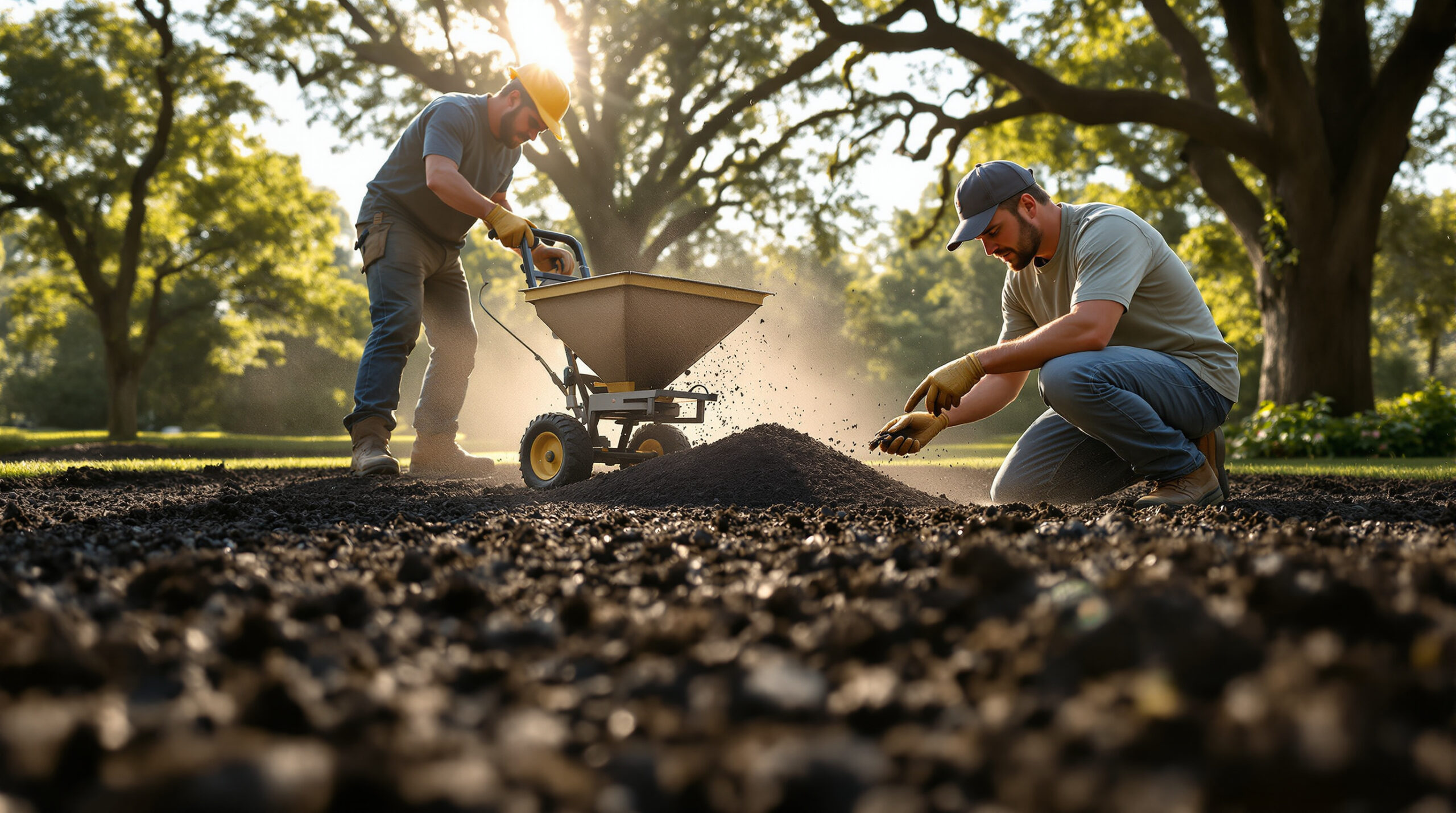
Adding three to four inches of quality compost tilled to a depth of six inches can shift a heavy clay soil from low to moderate organic matter content. This is not a small amount. A 5,000 square foot lawn needs roughly 60 to 80 cubic yards of compost for a full amendment to that depth. Partial amendment, two to three cubic yards broadcast and surface-raked, still improves seeding conditions meaningfully even if it does not transform the soil profile. Realistic expectations about what a single-season amendment can accomplish help homeowners plan for multi-season improvement programs.
Does topdressing with sand help clay lawns in WNC?
Sand topdressing without adequate organic matter frequently makes clay problems worse. When sand is applied to clay without substantial compost incorporation, it can create a concrete-like interface layer that further restricts root penetration and water movement. For more information on soil structure and appropriate amendments, consult EPA soil quality resources and professional landscaping associations.